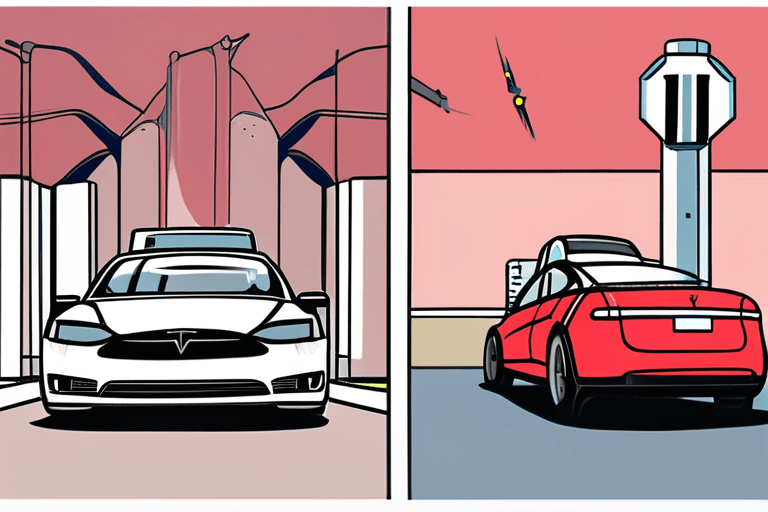
Tesla's stock recently reached record highs, fueled in part by investor optimism surrounding the company's potential to dominate the burgeoning driverless taxi market, estimated to be worth trillions of dollars. However, on-the-ground realities suggest Tesla faces significant hurdles in realizing this ambition.
While Tesla has deployed approximately 30 "Robotaxis" in Austin, Texas since June, according to independent tracking, this figure pales in comparison to Waymo, Alphabet's autonomous driving division. Waymo initiated its Austin service in March and currently operates around 200 vehicles in the city. Furthermore, Waymo boasts a fleet of over 2,500 vehicles across five cities, offering revenue-generating rides without human monitors. In contrast, while some Tesla vehicles have been observed operating autonomously without occupants in Austin, all Tesla Robotaxis carrying paying passengers still require a human safety driver.
The disparity in operational scale and technological maturity between Tesla and Waymo highlights the competitive landscape of the autonomous vehicle market. The ability to operate safely and reliably without human intervention is crucial for achieving profitability in the robotaxi business. Kara Kockelman, a transportation engineering professor at the University of Texas at Austin, stated she has never seen a Robotaxi in Austin, further illustrating the limited visibility of Tesla's current operations.
Tesla's foray into robotaxis is part of a broader strategy to diversify its revenue streams beyond electric vehicle sales. Success in this market could significantly boost Tesla's long-term financial performance and solidify its position as a technology leader. However, the company must overcome technological and regulatory challenges to achieve widespread adoption and compete effectively with established players like Waymo. The future success of Tesla's robotaxi venture hinges on its ability to rapidly scale its autonomous driving capabilities and demonstrate a proven track record of safety and reliability.












Discussion
Join the conversation
Be the first to comment