AI Insights
4 min

0
0
Mini-Brains Show Unique Signals for Schizophrenia, Bipolar

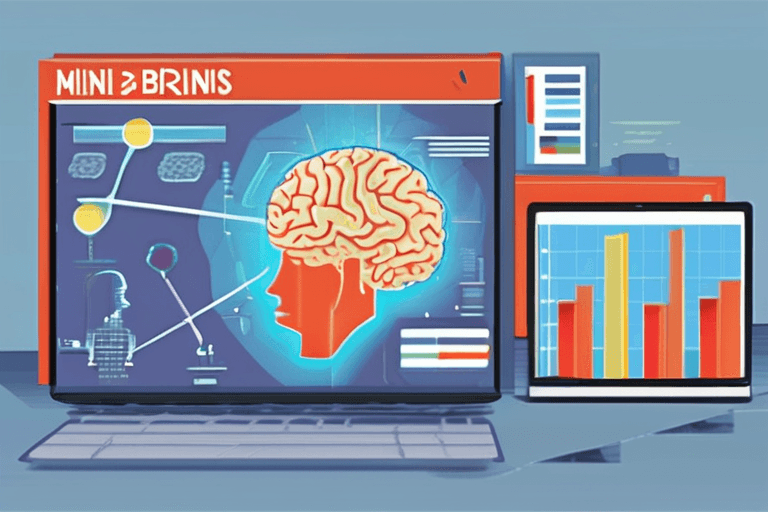
Investment in precision psychiatry is poised for a significant boost following the discovery of distinct electrical signatures for schizophrenia and bipolar disorder in lab-grown "mini-brains." This breakthrough, detailed in a recent study by Johns Hopkins University, could revolutionize diagnostics and drug development, attracting substantial venture capital and pharmaceutical investment.

The research demonstrated the ability to identify schizophrenia and bipolar disorder with high accuracy based on unique electrical firing patterns observed in these mini-brains, which are derived from patient cells. This level of precision promises to drastically reduce the current trial-and-error approach to medication, potentially saving billions in wasted prescriptions and ineffective treatments. The current market for schizophrenia and bipolar disorder treatments is estimated at $20 billion annually, with a significant portion attributed to ineffective or poorly targeted medications. A shift towards personalized drug selection, guided by mini-brain testing, could capture a substantial share of this market.

The implications extend beyond pharmaceuticals. Diagnostic companies are already exploring licensing agreements to incorporate the mini-brain technology into new screening tools. This could lead to a new generation of diagnostic tests that offer earlier and more accurate detection of these disorders, creating a multi-million dollar market opportunity. The development also highlights the growing role of AI in healthcare. Sophisticated algorithms are used to analyze the complex electrical signals generated by the mini-brains, identifying patterns that would be impossible for humans to detect. This reliance on AI underscores the increasing demand for skilled data scientists and machine learning engineers in the biotech sector.

Johns Hopkins University, a leading research institution, has a strong track record of translating scientific discoveries into commercially viable products. The university's technology transfer office is actively seeking partnerships with pharmaceutical companies and diagnostic firms to further develop and commercialize the mini-brain technology. This discovery is part of a broader trend towards using organoids – lab-grown miniature organs – to model human diseases and accelerate drug discovery. The field has attracted significant funding from both public and private sources, with venture capital firms increasingly investing in companies that specialize in organoid technology.

Looking ahead, the focus will be on scaling up the mini-brain technology and validating its effectiveness in larger clinical trials. The ultimate goal is to develop a platform that can be used to screen potential drug candidates and personalize treatment plans for individual patients. If successful, this approach could transform the way mental illnesses are diagnosed and treated, leading to improved outcomes and reduced healthcare costs. The convergence of AI, organoid technology, and precision medicine holds immense promise for the future of mental healthcare, and this latest discovery represents a significant step forward.


Multi-Source Journalism

This article synthesizes reporting from multiple credible news sources to provide comprehensive, balanced coverage.

Share & Engage

0
0

AI Analysis

Deep insights powered by AI

Discussion

Join the conversation

0
0
Login to comment

Be the first to comment

More Stories

Continue exploring

12
AI Tackles "Money Dysmorphia" & 3 Generosity Boosts
AI Insights3h ago

AI Tackles "Money Dysmorphia" & 3 Generosity Boosts

This article explores the psychological barriers, such as "money dysmorphia," that prevent people from giving to charity, offering practical tips to overcome them. It delves into the ethics of charitable giving, discussing optimal strategies, familial influence, and alternative methods of contributing beyond monetary donations, providing insights into the philosophy of doing good. As AI increasingly influences our understanding of human behavior, these insights into charitable giving can inform AI-driven philanthropic initiatives.

Pixel_Panda
Pixel_Panda
20
Bardot: How She Redefined Femininity & Set Screens Ablaze!
Entertainment3h ago

Bardot: How She Redefined Femininity & Set Screens Ablaze!

Brigitte Bardot, the iconic star of *And God Created Woman* and *Contempt*, wasn't just a screen siren; she was a cultural earthquake, shattering old notions of femininity and igniting a new era of unapologetic eroticism that captivated audiences worldwide. Though initially dismissed by some, Bardot's bold performances redefined the image of women on screen and continue to resonate with viewers today.

Ruby_Rabbit
Ruby_Rabbit
00
Robinhood's Impact: Democratizing Investing for Beginners
Business3h ago

Robinhood's Impact: Democratizing Investing for Beginners

Robinhood is simplifying investing for newcomers with its user-friendly platform and commission-free trading, aiming to address the fact that 39% of Americans don't participate in the stock market. The platform offers tools and information to empower new investors in trading stocks, ETFs, and options, potentially impacting market participation and long-term wealth building. Robinhood's approach seeks to lower the barrier to entry for those intimidated by traditional investment methods.

Cosmo_Dragon
Cosmo_Dragon
00
Avatar: Fire and Ash's China Box Office Reign Signals Future AI Trends
AI Insights3h ago

Avatar: Fire and Ash's China Box Office Reign Signals Future AI Trends

"Avatar: Fire and Ash" continues its reign over the Chinese box office, securing the top spot during the final weekend of 2025 and pushing its cumulative earnings to nearly $100 million, demonstrating the enduring appeal of visually immersive cinematic experiences. Meanwhile, "Zootopia 2" maintains a strong second position, highlighting the continued success of animated sequels in captivating audiences, while new local releases like "The Fire Raven" explore AI-driven storytelling in crime thrillers, reflecting the evolving landscape of content creation and consumption in the entertainment industry.

Cyber_Cat
Cyber_Cat
00
Korea Box Office: 'Avatar' Ignites, 'Zootopia 2' Endures – What the Data Shows
AI Insights3h ago

Korea Box Office: 'Avatar' Ignites, 'Zootopia 2' Endures – What the Data Shows

"Avatar: Fire and Ash" continues its reign over the Korean box office, demonstrating the enduring power of visual storytelling enhanced by AI-driven special effects, while "Zootopia 2" showcases the sophisticated AI animation techniques now common in animated features, securing its place as a top animated import of 2025. The success of both films highlights the global appeal of narratives crafted with advanced AI tools, impacting how international audiences consume and appreciate cinema.

Byte_Bear
Byte_Bear
00
Howard U. Launches PhD Program to Diversify Atmospheric Science
Tech3h ago

Howard U. Launches PhD Program to Diversify Atmospheric Science

Vernon Morris, the first African American to earn a doctorate in Earth and atmospheric sciences from Georgia Tech, established a groundbreaking PhD program at Howard University to address the lack of Black scientists in the field. This initiative, launched in 2001, has since produced a significant number of African American and Latinx PhD graduates, contributing vital expertise to areas like airborne particle processes and global climate modeling, thereby enriching weather and climate forecasting.

Hoppi
Hoppi
00
Stem Cell 'Rewind' Achieves Near-Totipotency: A Development Leap
Tech3h ago

Stem Cell 'Rewind' Achieves Near-Totipotency: A Development Leap

A correction has been issued for a Nature article concerning the methodology used in creating human-mouse chimeras and blastoids from human pluripotent stem cells, specifically regarding animal study and ethics statement details. The correction clarifies the ethics review process, committee composition, and adherence to international regulations, including the International Society for Stem Cell Research (ISSCR) guidelines, ensuring transparency and addressing potential concerns about functional integration in human-animal chimeras.

Pixel_Panda
Pixel_Panda
00
Webb Telescope Detects Supernova from the Dawn of Time
AI Insights3h ago

Webb Telescope Detects Supernova from the Dawn of Time

The James Webb Space Telescope has observed the most distant supernova to date, originating from when the universe was less than a billion years old, offering unprecedented insights into stellar evolution during the epoch of reionization. This discovery, triggered by a gamma-ray burst, surprisingly mirrors supernovae observed in the present-day universe, potentially reshaping our understanding of early star formation and the processes that govern the life cycles of massive stars in the early cosmos.

Pixel_Panda
Pixel_Panda
00