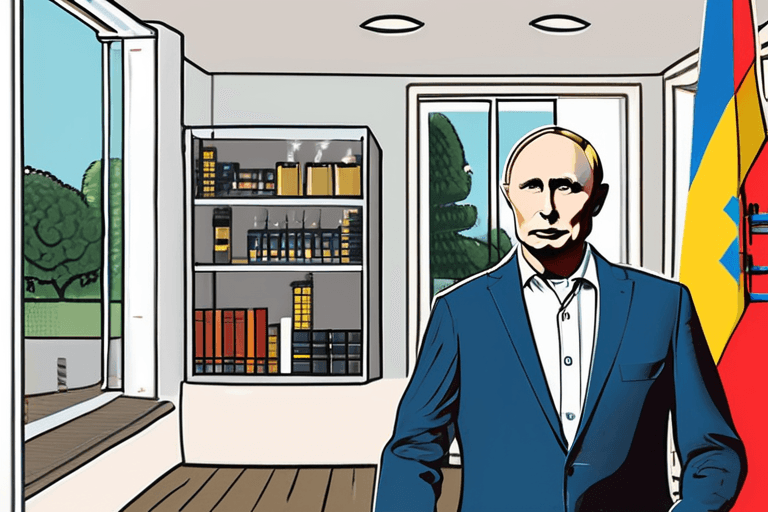
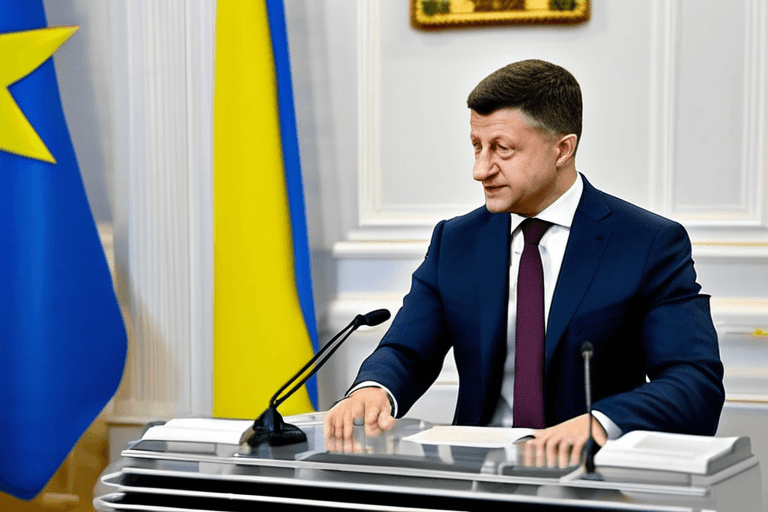
Ukrainian President Volodymyr Zelenskyy rejected Russia's claim that Ukraine launched an attack on a residence belonging to Russian President Vladimir Putin. The denial followed accusations made by Russian Foreign Minister Sergey Lavrov on Monday, alleging the attack occurred at Putin's residence in the Novgorod region of northwestern Russia.
Lavrov stated that 91 long-range strike drones were used in the purported attack. He added that Russian air defense systems intercepted and destroyed the drones, and that no injuries were reported. Kremlin foreign policy aide Yury Ushakov indicated the alleged strike took place on Sunday, shortly after discussions held in Florida between undisclosed parties.
The claims and counterclaims arrive amidst ongoing conflict between Russia and Ukraine, heightening tensions and underscoring the challenges of verifying information in real-time during wartime. The use of drones in modern warfare has become increasingly prevalent, raising concerns about autonomous weapons systems and the potential for escalation.
The incident highlights the role of artificial intelligence in modern warfare, particularly in the deployment and defense against drone attacks. AI algorithms are used for target recognition, navigation, and autonomous decision-making in drone operations. Conversely, AI-powered systems are also employed in air defense to detect and neutralize incoming threats.
The implications of AI in warfare extend beyond the battlefield. The development and deployment of autonomous weapons systems raise ethical questions about accountability and the potential for unintended consequences. Discussions are ongoing within international organizations and among policymakers regarding the regulation of AI in military applications. The current status of the alleged attack remains contested, with independent verification proving difficult. Further investigation and analysis are needed to determine the veracity of the claims made by both sides.















Discussion
Join the conversation
Be the first to comment