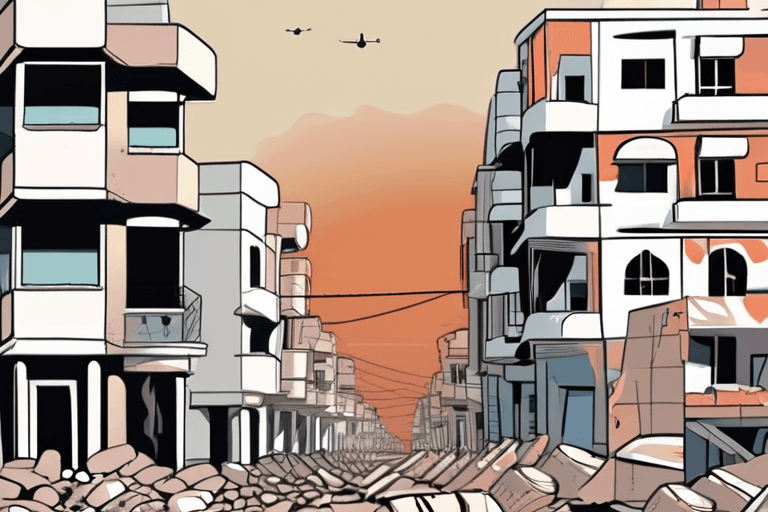
Outbreaks of sectarian violence are posing a significant challenge to President Ahmed al-Sharaa's efforts to stabilize Syria and reintegrate the nation into the global community following 14 years of civil war. The latest instance occurred on Sunday in the coastal cities of Latakia and Tartous, where Alawite protesters clashed with government supporters, prompting the deployment of government troops who themselves were then attacked.
The Alawite community, historically influential in Syria, alleges marginalization under the current administration. These protests and the ensuing violence raise concerns about the fragility of the nation's security and the potential for further destabilization.
The unrest highlights the deep-seated sectarian tensions that have plagued Syria for decades. The country's diverse religious and ethnic makeup, including Sunni Muslims, Alawites, Christians, and Kurds, has often been a source of conflict, particularly during the civil war that began in 2011. The conflict exacerbated existing divisions, leading to widespread displacement, loss of life, and a humanitarian crisis.
Fadel Abdulghany, Founder and ex, commented on the situation, emphasizing the need for inclusive governance and addressing the grievances of all communities to prevent further escalation. He noted that the marginalization felt by the Alawites, whether real or perceived, could be exploited by extremist groups seeking to undermine the government.
The Syrian government has yet to issue a comprehensive response to the recent clashes, but state media has reported that authorities are investigating the incidents and taking measures to restore order. The deployment of troops to Latakia and Tartous suggests a concern within the government about the potential for the violence to spread.
Internationally, the renewed sectarian tensions are being closely monitored. The United Nations has called for restraint and urged all parties to engage in dialogue to resolve their differences peacefully. Neighboring countries, already burdened by the influx of Syrian refugees, are concerned about the potential for further instability to spill across borders.
President al-Sharaa now faces the daunting task of addressing the underlying causes of the sectarian tensions while simultaneously rebuilding the country's infrastructure and economy. His ability to navigate these challenges will be crucial in determining Syria's future stability and its reintegration into the international arena. The coming weeks will be critical in assessing whether the government can successfully de-escalate the situation and prevent further outbreaks of violence.














Discussion
Join the conversation
Be the first to comment