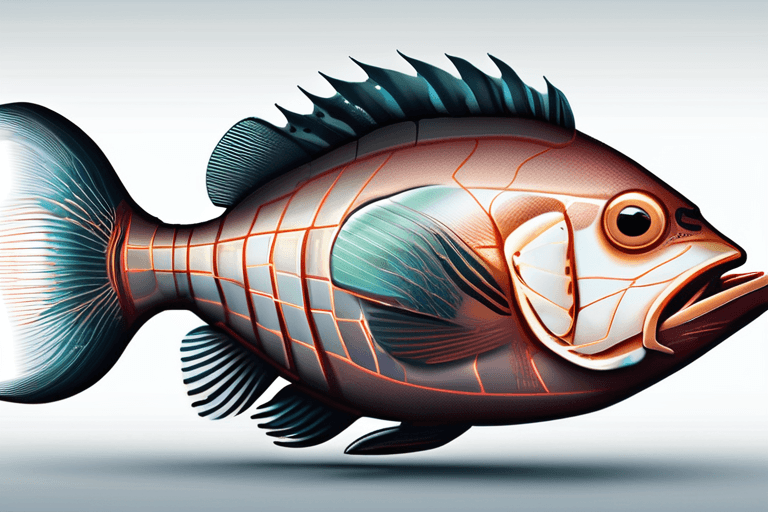
Scientists at the Woods Hole Oceanographic Institution (WHOI) discovered that mid-sized fish, such as the bigscale pomfret, serve as a crucial link between the deep ocean and surface food webs, explaining why large predators like sharks spend significant time in the ocean's twilight zone. Researchers tracked these fish, which inhabit the mesopelagic zone during the day and ascend to feed at night, using satellite tags for the first time. The study, published this week, reveals how these movements are influenced by water clarity, potentially impacting entire ocean food chains.
The mesopelagic zone, also known as the twilight zone, spans depths of 200 to 1,000 meters (650 to 3,300 feet). This dimly lit region has long been recognized as a critical habitat, but the specific mechanisms driving its ecological importance have remained elusive. Danny Mears, a researcher at WHOI, explained that "understanding how energy moves between the surface and the deep ocean is essential for predicting the impacts of climate change and human activities on marine ecosystems."
The research team employed satellite-based tracking tags to monitor the movements of bigscale pomfret. These tags provided unprecedented insights into the fish's daily vertical migrations. The data revealed that the pomfret's behavior is closely tied to water clarity. In clearer waters, the fish tend to stay deeper during the day to avoid predators, while in murkier waters, they may venture closer to the surface.
This behavior has significant implications for the entire ocean food web. As the pomfret migrate vertically, they transport energy and nutrients from the surface to the deep ocean and vice versa. This process, known as the "biological pump," plays a crucial role in regulating the ocean's carbon cycle.
"These mid-sized fish are essentially acting as elevators, shuttling resources between the surface and the deep," said Mears. "Their movements directly influence the distribution of energy and nutrients throughout the water column."
The findings also shed light on the foraging behavior of large predators like sharks. By understanding the movements of the pomfret, scientists can better predict where and when sharks are likely to be found. This information is valuable for conservation efforts and for mitigating potential conflicts between humans and sharks.
The study highlights the importance of considering the entire ocean ecosystem when assessing the impacts of environmental change. As climate change alters water clarity and ocean temperatures, the behavior of mid-sized fish like the pomfret may be affected, with cascading consequences for the entire food web.
Researchers plan to continue studying the movements of mesopelagic fish to gain a more comprehensive understanding of their role in the ocean ecosystem. Future research will focus on investigating the impacts of plastic pollution and other human activities on these critical species. The team also hopes to develop new technologies for tracking fish in the deep ocean, allowing for even more detailed observations of their behavior.



















Discussion
Join the conversation
Be the first to comment