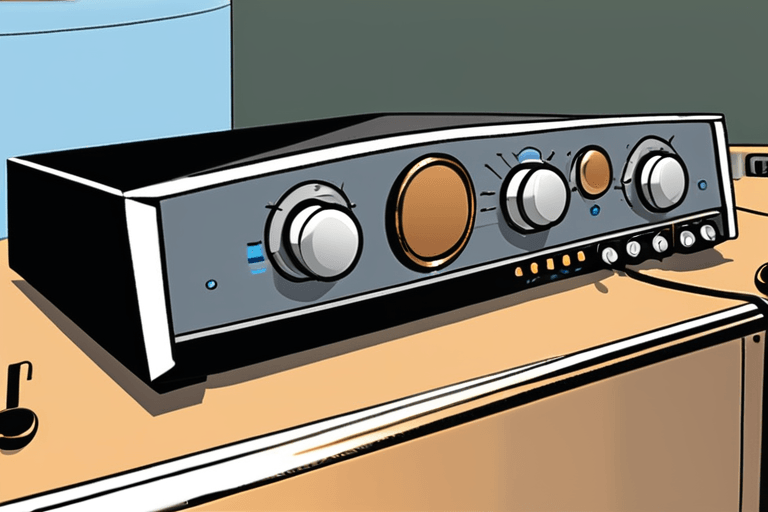
Every audio system requires amplification, and preamplifiers, or preamps, play a crucial role in preparing the audio signal before it reaches the amplifier and ultimately the speakers. A preamplifier handles all necessary processing of the audio signal originating from the music source before it is amplified and sent to the system's speakers.
In traditional hi-fi setups, loudspeakers are passive, meaning they do not produce their own power and require an amplified signal from an external amplifier to function. Even in modern, self-contained audio systems like the Sonos Era 100, the drivers responsible for producing sound need amplification, though this process occurs within a single unit rather than separate components.
The primary function of a preamp is to manage the audio signal before amplification. This includes tasks such as impedance matching, signal boosting, and input selection. Impedance matching ensures that the source and amplifier are compatible, preventing signal loss or distortion. Signal boosting amplifies the weak audio signal from sources like turntables or microphones to a level suitable for the main amplifier. Input selection allows users to switch between different audio sources, such as CD players, turntables, or streaming devices.
While some modern audio systems integrate preamplification functions directly into the amplifier or source device, dedicated preamps offer greater flexibility and control, particularly for audiophiles and those using vintage equipment. The need for a separate preamp depends on the specific audio setup and the types of sources being used. For example, a turntable requires a phono preamp to boost the low-level signal from the cartridge.












Discussion
Join the conversation
Be the first to comment