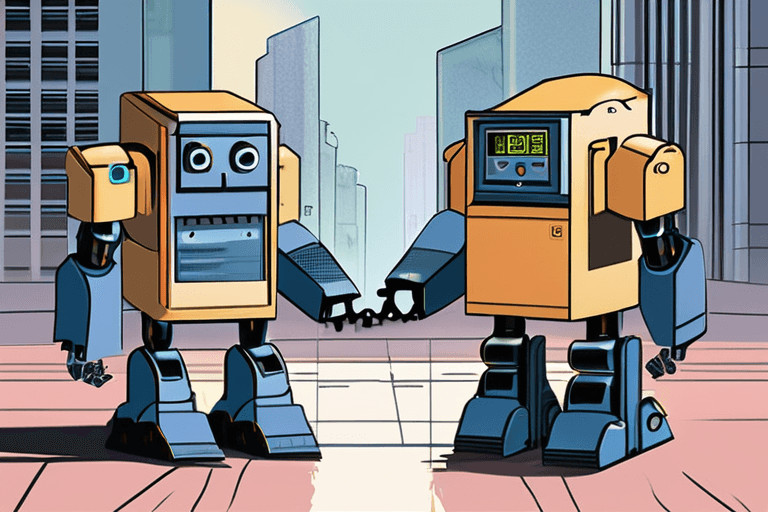
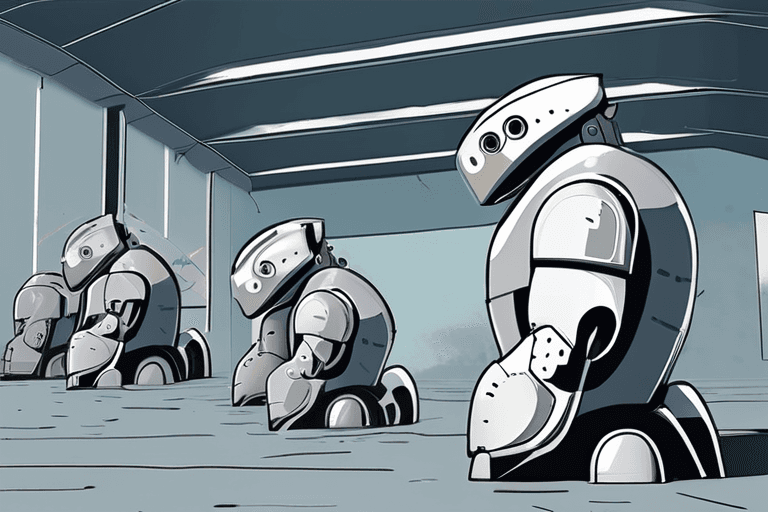
Robots are being utilized in post-cataclysm environments to clear rubble and rebuild infrastructure, showcasing advancements in artificial intelligence and robotics engineering. These robots, like the unit referred to as Twobit, are designed for resilience and strength, capable of withstanding environmental challenges and handling heavy debris.
Twobit's function involves clearing remnants of older buildings, specifically one with a deteriorated marble facade. The robot operates using solar panels for energy and a sophisticated circulatory system that filters and remixes elements from the air to lubricate its joints. This system, a product of advanced engineering, highlights the potential for self-sustaining robotic systems in harsh environments.
The use of robots in disaster recovery raises questions about the role of AI in rebuilding societies after catastrophic events. Dr. Aris Thorne, a robotics expert at the Global Institute of Technology, stated, "These robots represent a significant step forward in our ability to respond to and recover from disasters. Their ability to operate autonomously and perform complex tasks in dangerous environments is invaluable."
The development of these robots also brings forth ethical considerations. The reliance on AI for rebuilding efforts could potentially displace human labor and create new societal dependencies on technology. Concerns about the long-term impact of AI on employment and the potential for algorithmic bias are being actively discussed within the scientific community.
Current research focuses on improving the robots' adaptability and decision-making capabilities. Engineers are working on enhancing their sensory perception and navigation systems to enable them to operate more effectively in unpredictable environments. Future developments may include the integration of machine learning algorithms to allow the robots to learn from their experiences and optimize their performance over time.


















Discussion
Join the conversation
Be the first to comment