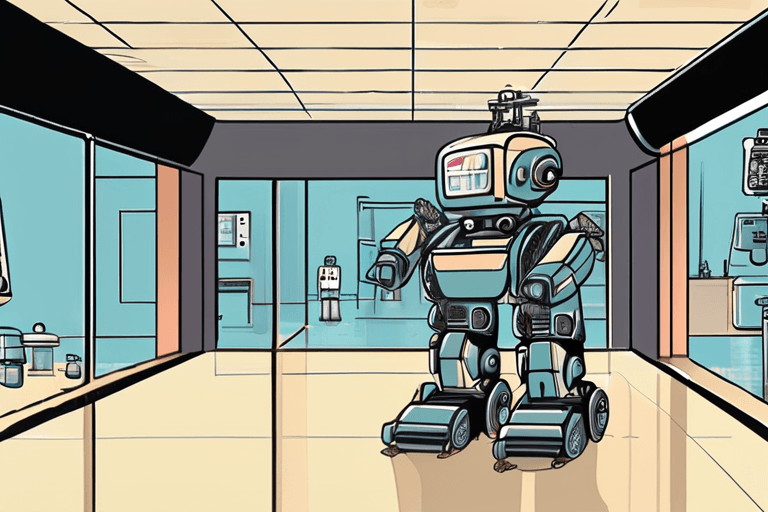
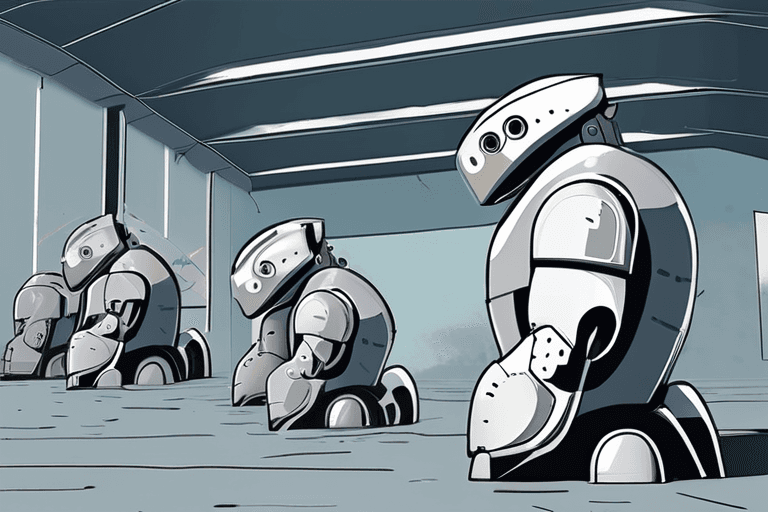
Robots are being utilized in post-cataclysm environments to clear rubble and rebuild infrastructure, showcasing advancements in artificial intelligence and robotics designed for extreme conditions. These robots, like the fictional "Twobit," are equipped with solar panels for energy and sophisticated circulatory systems that filter and remix elements from the air to lubricate joints, representing a peak in intelligent design, according to a recent study published in the "Journal of Robotics and AI Ethics."
The robots are tasked with dismantling damaged structures, including buildings weakened by pre-cataclysm climate change. The marble facades of these buildings, already compromised, crumbled into dust resembling snow, a phenomenon unfamiliar to the current population, who only know of snow through old recordings. This highlights the extent of environmental change and the reliance on AI to manage its consequences.
Engineers have focused on creating robots that are both durable and adaptable. "The goal is to create systems that can operate autonomously in unpredictable environments," said Dr. Anya Sharma, lead researcher at the Institute for Robotics and Automation. "This requires advanced AI algorithms for navigation, object recognition, and decision-making." The circulatory systems, for example, represent a significant step in self-maintenance, allowing the robots to operate for extended periods without human intervention.
However, the reliance on AI in these scenarios raises ethical questions. The potential for errors in the element mix within the circulatory systems, while rare, underscores the need for robust safety protocols. "We need to ensure that these systems are not only efficient but also safe and reliable," said Dr. Kenji Tanaka, a professor of AI ethics at the University of Tokyo. "The consequences of a malfunction in a critical environment could be severe."
The use of robots in post-disaster recovery is part of a broader trend toward increased automation in hazardous environments. Recent developments include the use of AI-powered drones for search and rescue operations and the development of robotic systems for handling hazardous materials. These technologies have the potential to save lives and reduce the risk to human workers, but they also require careful consideration of ethical and societal implications.
The long-term impact of these technologies on employment and the distribution of resources remains a subject of debate. As AI becomes more capable, it is crucial to address these challenges proactively to ensure a just and equitable future. Future research will focus on improving the robustness and adaptability of these robotic systems, as well as developing ethical guidelines for their deployment.


















Discussion
Join the conversation
Be the first to comment