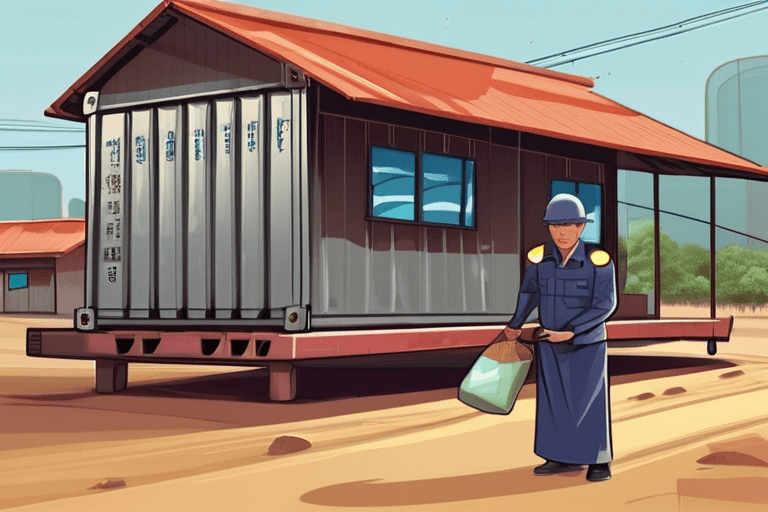
A wall of steel and corrugated iron now defines the lives of residents in Chouk Chey, a Cambodian village bordering Thailand. Rows of shipping containers, strategically placed by Thai forces, have effectively cut off the village, preventing residents from returning to their homes. The scene, captured by Al Jazeera's Assed Baig, paints a stark picture of escalating tensions and raises questions about the future of border security in an era increasingly shaped by geopolitical maneuvering and technological advancements.
The deployment of shipping containers as a physical barrier is not entirely new. However, its application in a border dispute, impacting civilian lives, highlights a concerning trend. Historically, borders have been demarcated by natural features, fences, or walls. The use of easily deployable, modular structures like shipping containers represents a shift towards a more fluid and potentially escalatory approach to border control. This tactic raises concerns about international law and the rights of civilians caught in the crossfire.
For the villagers of Chouk Chey, the reality is immediate and devastating. According to Al Jazeera’s report, families are separated from their homes and livelihoods, their access restricted by the imposing container blockade. The reasons behind Thailand's actions remain officially unclear, though speculation points to ongoing disputes over land and resources in the border region. Whatever the justification, the impact on the local population is undeniable. The containers not only physically restrict movement but also symbolize a breakdown in diplomatic relations and a disregard for the well-being of those living in the affected area.
The situation in Chouk Chey also provides a compelling case study for examining the role of AI in conflict and security. While there is no direct evidence of AI being used in the physical deployment of the containers, the event underscores the increasing reliance on data analysis and predictive algorithms in border management. AI-powered surveillance systems, for example, could be used to monitor border activity, identify potential threats, and inform decisions about resource allocation, including the placement of physical barriers. Facial recognition technology, coupled with vast databases, could also be employed to control movement across the border, potentially exacerbating the plight of displaced villagers.
"The use of technology in border security is a double-edged sword," explains Dr. Anya Sharma, a specialist in AI ethics and international relations. "On one hand, it can enhance security and efficiency. On the other, it can lead to increased surveillance, discrimination, and the erosion of fundamental rights. The key is to ensure that these technologies are deployed responsibly and ethically, with appropriate safeguards in place to protect vulnerable populations."
The implications of this incident extend beyond the immediate humanitarian crisis in Chouk Chey. It serves as a warning about the potential for escalating tensions in a world where technological advancements are rapidly changing the landscape of conflict. As AI becomes more integrated into border security and military operations, it is crucial to consider the ethical and societal implications. International cooperation and clear legal frameworks are needed to prevent the misuse of these technologies and to ensure that the rights of civilians are protected in conflict zones. The wall of containers in Chouk Chey is not just a physical barrier; it is a stark reminder of the challenges and responsibilities that come with an increasingly interconnected and technologically advanced world.
















Discussion
Join the conversation
Be the first to comment