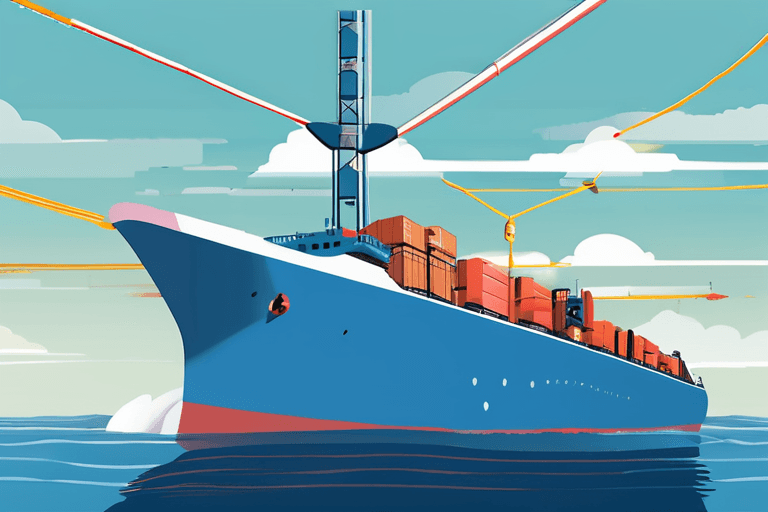
Finnish police detained a cargo vessel suspected of damaging an undersea telecommunications cable running from Helsinki to Estonia across the Gulf of Finland. The vessel, named the Fitburg, was sailing from St. Petersburg to Haifa, Israel, under the flag of St. Vincent and Grenadines when the incident occurred.
All 14 crew members were arrested following the damage to the cable, which is owned by Finnish telecoms operator Elisa. According to a statement released by Elisa, the damage "had not affected the functionality of Elisa's services in any way," as services were rerouted. The Finnish coast guard approached and detained the vessel.
The investigation is focused on "aggravated disruption of telecommunications" and "aggravated damage," according to police officials. This incident highlights the vulnerability of undersea cables, which are critical infrastructure for global communication and data transfer. These cables carry approximately 99% of international data traffic, making them essential for the functioning of the internet and global economy.
The Baltic Sea region has experienced a series of incidents involving damage to underwater cables in recent years. These incidents have raised concerns about potential sabotage and the security of critical infrastructure. Some experts and political leaders have characterized these events as part of a "hybrid war" allegedly carried out by Russia against Western countries, a concern that has intensified since the Russian invasion of Ukraine in 2022. Hybrid warfare often involves a combination of conventional and unconventional tactics, including cyberattacks and disinformation campaigns, to destabilize or undermine an adversary.
The increasing reliance on artificial intelligence (AI) in monitoring and protecting critical infrastructure is a notable development in this field. AI algorithms can analyze vast amounts of data from sensors and surveillance systems to detect anomalies and potential threats to undersea cables. Machine learning models can be trained to identify patterns of activity that may indicate sabotage or accidental damage, allowing for quicker response times and preventative measures. However, the use of AI also presents challenges, including the need for robust cybersecurity measures to protect AI systems from being compromised by malicious actors. The development of explainable AI (XAI) is also crucial, ensuring that the decisions made by AI systems are transparent and understandable to human operators.
The investigation into the Fitburg incident is ongoing. Finnish authorities are working to determine the exact cause of the damage and whether it was intentional. The incident underscores the importance of international cooperation in protecting undersea cables and ensuring the security of global communications infrastructure. The incident also serves as a reminder of the potential vulnerabilities of critical infrastructure in an increasingly interconnected world.




















Discussion
Join the conversation
Be the first to comment