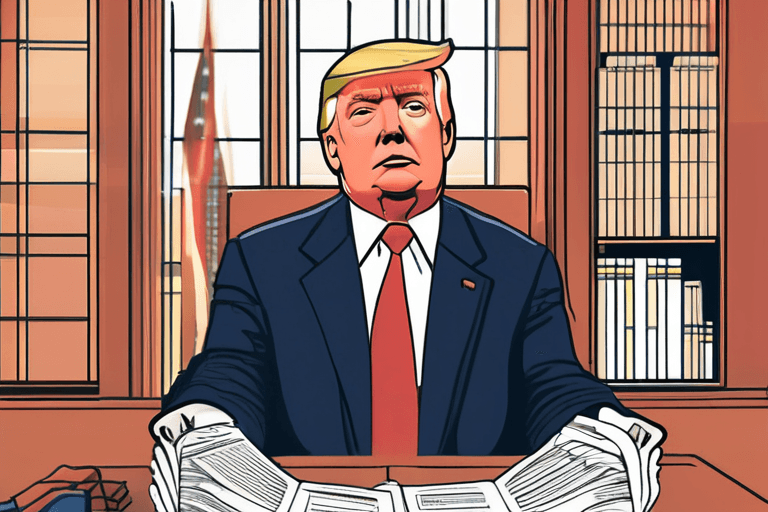
The American Civil Liberties Union (ACLU) and other organizations representing medical researchers announced Monday that they reached a settlement with the federal government in a lawsuit concerning research grant applications rejected under a policy later voided by the courts. The agreement, which awaits judicial approval, mandates that the National Institutes of Health (NIH) restart reviews of grants previously blocked due to ideological objections raised during the Trump administration.
While the settlement does not guarantee funding for the grants, it ensures they will undergo the standard peer review process. These grants were initially rejected without review based on the Trump administration's ideological opposition to their content. The policy that led to the rejections was subsequently declared "arbitrary and capricious," violating the Administrative Procedure Act. This decision was ultimately upheld by the Supreme Court.
The lawsuit arose after the Trump administration identified several categories of research it opposed, some defined vaguely. These categories included research involving fetal tissue, humanized mice, and studies related to sexual and gender identity. Experts in the scientific community voiced concerns that the administration's policy hindered critical medical advancements. For example, research using fetal tissue has been instrumental in developing vaccines for diseases like polio and rubella, as well as treatments for conditions like rheumatoid arthritis and Parkinson's disease.
"This settlement is a victory for scientific integrity and the pursuit of knowledge," stated a representative from the ACLU in a press release. "Ideological biases should never dictate which research projects receive funding. The peer review process is designed to ensure that the most promising and impactful research is supported."
The NIH's standard peer review process involves a panel of experts evaluating grant applications based on scientific merit, significance, and the qualifications of the researchers. This process is intended to ensure that funding decisions are based on objective criteria, rather than political considerations.
The practical implications of this settlement are significant for researchers who had their grant applications rejected. It offers them a second chance to have their work evaluated fairly. Furthermore, it sends a message that scientific research should be protected from political interference.
The next step is for the judge overseeing the case to approve the settlement. If approved, the NIH will begin the process of re-reviewing the affected grant applications. The timeline for this process is not yet clear, but researchers are hopeful that funding decisions will be made in a timely manner, allowing them to resume their important work.



















Discussion
Join the conversation
Be the first to comment