
3 min
BusinessJust now
Vienna Palace Holiday Market Boosts Economy by €5M
This article is a travel piece and does not contain newsworthy business elements.

00
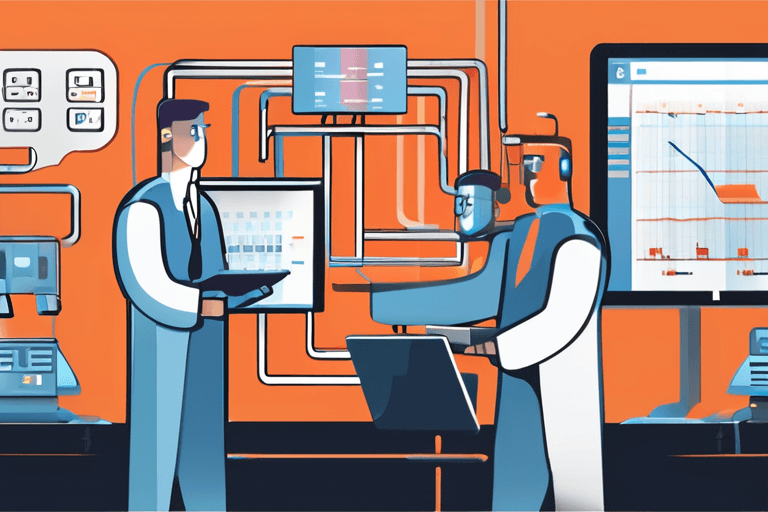
At Gold Bond Inc., a 77-year-old promotional products company, a strategic approach to artificial intelligence adoption, led by the IT department, resulted in significant gains in employee productivity and workflow efficiency. CIO Matt Price recognized that simply introducing a chatbot would not drive meaningful AI adoption. Instead, the focus was on integrating AI into existing, cumbersome workflows, such as ERP intake, document processing, and call follow-ups.
Price's strategy involved identifying a small group of "super-users" to pinpoint specific use cases relevant to Gold Bond and to train other employees. Gemini and other AI models were then integrated into high-friction workflows, supported by sandbox testing, guardrails, and human review for public-facing content. This careful integration led to a marked increase in daily AI usage, rising from 20% to 71%, with 43% of employees reporting time savings of up to two hours per day. "I wanted to bring everybody on the journey," Price told VentureBeat. "After we reset some expectations, people started leaning towards it. Our adoption has taken off."
Gold Bond, Inc., a major player in the $20.5 billion promotional products industry, provides custom swag and corporate gifts to 8,500 active customers. The company's experience highlights a crucial aspect of successful AI implementation: the necessity of IT-led workflow integration. This approach contrasts with simply deploying AI tools without considering how they fit into existing business processes.
The implications of Gold Bond's experience extend beyond the promotional products industry. Many organizations struggle to realize the full potential of AI due to a lack of strategic integration. A common pitfall is focusing on the technology itself rather than on how it can solve specific business problems. By focusing on streamlining ERP systems and automating product visualizations, Gold Bond demonstrated the value of a targeted approach.
The success at Gold Bond underscores the importance of change management in AI adoption. Resetting expectations and involving employees in the process are crucial for overcoming resistance and fostering a culture of AI acceptance. The use of super-users to champion AI adoption within the organization proved to be an effective strategy.
As AI technology continues to evolve, the need for IT-led workflow integration will only become more critical. The latest developments in AI, such as more sophisticated natural language processing and machine learning algorithms, offer even greater opportunities for automation and efficiency gains. However, these opportunities can only be realized if AI is strategically integrated into existing workflows.
Multi-Source Journalism
This article synthesizes reporting from multiple credible news sources to provide comprehensive, balanced coverage.
Deep insights powered by AI
Continue exploring
This article is a travel piece and does not contain newsworthy business elements.

Across the globe, people celebrated the arrival of 2026 with fireworks, light shows, and traditional gatherings. From Sydney to Seoul and Bangkok to Amsterdam, these celebrations, as documented in various news sources, showcased shared joy and cultural traditions as revelers welcomed the new year.


US pressure in the Caribbean is causing a significant 25% drop in Venezuelan oil production from the Orinoco Belt, highlighting how geopolitical actions can directly impact energy markets. This situation demonstrates the vulnerability of resource-dependent economies to external pressures and raises questions about the future of AI-driven resource management in politically unstable regions.


US stocks ended 2025 on a weak note, with the S&P 500 declining 0.7% amid broad market declines as only 3 of its stocks closed positively. The Nasdaq 100 also fell 0.8%, and the Magnificent Seven Index dropped 0.7%, while 10-year Treasury yields rose 5 basis points, signaling a risk-off sentiment to close the year.

Gerber Kawasaki's CEO suggests Paramount would need to increase its Warner Bros. bid by $10 billion to succeed, potentially benefiting Netflix. Paramount's current offer, including a $40.4 billion equity financing guarantee from Larry Ellison, aims to counter Netflix's existing deal for Warner Bros.' studio and streaming assets. The increased price reflects the competitive landscape and the value of Warner Bros.' assets in the evolving media market.


Bloomberg News reports that Indian cuisine has significantly elevated its quality and presence in New York, emerging as a leading culinary force globally. This shift, highlighted by Bloomberg's food editor, suggests a potential market impact on the food industry and related sectors. The analysis was featured on Bloomberg Markets, indicating its relevance to financial audiences.
Stocks and bonds experienced a downturn at the close of 2025, impacting what was otherwise a strong year. The S&P 500's post-Christmas losses trimmed its 2025 advance to approximately 16%, while the Nasdaq 100 fell 0.8% on Wednesday, though both indexes still marked their longest double-digit gain streak since 2021.

US rice and cotton farmers are set to receive the largest portion of a $12 billion government aid package, intended to alleviate economic pressures. While welcomed, some industry experts believe the payments may not be enough to fully revitalize the struggling agricultural sector, highlighting the ongoing challenges in balancing AI-driven efficiency with traditional farming practices.


Sovereign wealth funds (SWFs) reached a record $15 trillion in assets, driven by strong market performance and increased investment in technology. In 2025, SWFs invested $66 billion in AI and digitalization, with Middle Eastern funds like Mubadala, KIA, and QIA leading the charge, signaling a strategic shift towards tech-driven growth.

China is on track to fulfill its pledge to purchase 12 million tons of US soybeans by early 2025, having already bought two-thirds of that amount, signaling a potential trade truce with the US. While this development offers relief to American exporters, China continues to diversify its soybean sourcing, maintaining significant purchases from Brazil and Argentina.
Synthesizing information from multiple news sources, Canadian equities experienced a surprisingly strong year, marked by a 29% gain in the SPTSX index driven by miners, financial firms, and tech companies, despite initial turmoil caused by US trade policies and political tensions. The market rebounded due to eased tensions, a favorable economic position, and Federal Reserve rate cuts, leading to record highs and a positive outlook for 2026.

The US dollar is on track for its worst year since 2017, largely due to expectations of Federal Reserve interest rate cuts under a potentially new, more dovish chair. This anticipated policy divergence from other developed nations, combined with factors like increased European defense spending and potential rate hikes in countries like Canada and Australia, is weakening the dollar's appeal.
Discussion
Join the conversation
Be the first to comment