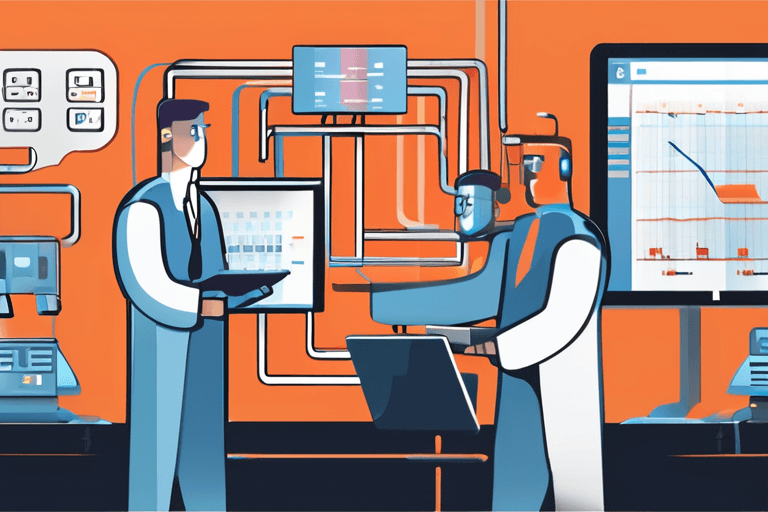
At Gold Bond Inc., a 77-year-old promotional products company, a strategic approach to artificial intelligence adoption, led by the IT department, resulted in significant gains in employee productivity and workflow efficiency. CIO Matt Price recognized that simply introducing a chatbot would not drive meaningful AI adoption. Instead, the focus was on integrating AI into existing, cumbersome workflows, such as ERP intake, document processing, and call follow-ups.
Price's strategy involved identifying a small group of "super-users" to pinpoint specific use cases relevant to Gold Bond and to train other employees. Gemini and other AI models were then integrated into high-friction workflows, supported by sandbox testing, guardrails, and human review for public-facing content. This careful integration led to a marked increase in daily AI usage, rising from 20% to 71%, with 43% of employees reporting time savings of up to two hours per day. "I wanted to bring everybody on the journey," Price told VentureBeat. "After we reset some expectations, people started leaning towards it. Our adoption has taken off."
Gold Bond, Inc., a major player in the $20.5 billion promotional products industry, provides custom swag and corporate gifts to 8,500 active customers. The company's experience highlights a crucial aspect of successful AI implementation: the necessity of IT-led workflow integration. This approach contrasts with simply deploying AI tools without considering how they fit into existing business processes.
The implications of Gold Bond's experience extend beyond the promotional products industry. Many organizations struggle to realize the full potential of AI due to a lack of strategic integration. A common pitfall is focusing on the technology itself rather than on how it can solve specific business problems. By focusing on streamlining ERP systems and automating product visualizations, Gold Bond demonstrated the value of a targeted approach.
The success at Gold Bond underscores the importance of change management in AI adoption. Resetting expectations and involving employees in the process are crucial for overcoming resistance and fostering a culture of AI acceptance. The use of super-users to champion AI adoption within the organization proved to be an effective strategy.
As AI technology continues to evolve, the need for IT-led workflow integration will only become more critical. The latest developments in AI, such as more sophisticated natural language processing and machine learning algorithms, offer even greater opportunities for automation and efficiency gains. However, these opportunities can only be realized if AI is strategically integrated into existing workflows.

















Discussion
Join the conversation
Be the first to comment