Have you ever felt velvetmist? It's a complex and subtle emotion that elicits feelings of comfort, serenity, and a gentle sense of floating. Peaceful, but more ephemeral and intangible than contentment. It might be evoked by the sight of a sunset or a moody, low-key album. If you haven't ever felt this sensation—or even heard of it—that's not surprising. A Reddit user named noahjeadie generated it with ChatGPT, along with advice on how to evoke the feeling. With the right essential oils and soundtrack, apparently, you too can feel like a soft fuzzy draping ghost floating through a lavender suburb.
Don't scoff: Researchers say more and more terms for these neo-emotions are showing up online, describing new dimensions and aspects of feeling. Velvetmist was a key example in a journal article about the phenomenon published in July 2025. But most neo-emotions aren't the inventions of emo artificial intelligences. Humans come up with them, and they're part of a big change in the way researchers are thinking about feelings, one that emphasizes how people continuously spin out new ones in response to a changing world. Velvetmist might've been a chatbot one-off, but it's not unique. The sociology of emotions is undergoing a fascinating transformation, fueled by our increasingly digital and interconnected lives.
The rise of AI tools like ChatGPT has democratized the process of naming and defining emotions. Previously, this was largely the domain of psychologists and philosophers. Now, anyone with access to a language model can conjure a feeling, give it a name, and even prescribe methods for experiencing it. This raises profound questions about the nature of emotion itself. Are emotions fixed, universal categories, or are they fluid, culturally constructed experiences that we actively shape and redefine?
Consider "sonder," a term coined by John Koenig in his "Dictionary of Obscure Sorrows." Sonder is the realization that each random passerby is living a life as vivid and complex as your own. While the feeling itself isn't new, the act of naming it provides a framework for understanding and sharing the experience. It allows us to connect with others who have felt the same way, fostering a sense of community and shared humanity.
"The internet acts as an accelerant," explains Dr. Anya Sharma, a leading researcher in affective computing at the Massachusetts Institute of Technology. "It allows for the rapid dissemination of new emotional concepts, and it provides a platform for individuals to collectively refine and redefine these concepts." Dr. Sharma's research focuses on how AI can be used to identify and categorize neo-emotions, providing valuable insights into the evolving emotional landscape.
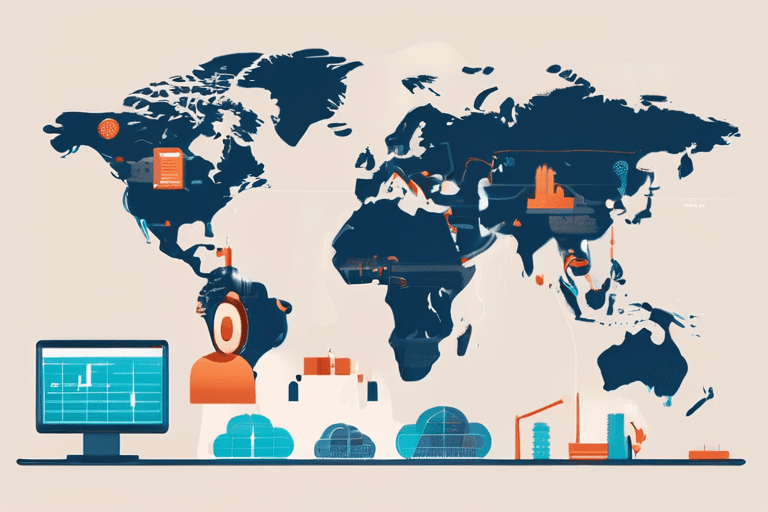
One of the key drivers behind the creation of neo-emotions is the need to articulate experiences that are unique to the modern world. The constant connectivity, the information overload, and the blurring of lines between the physical and digital realms have given rise to a whole new spectrum of feelings. Consider the feeling of "digital fatigue," the exhaustion and overwhelm that comes from spending too much time online. Or "FOMO" (fear of missing out), the anxiety that arises from seeing others' seemingly perfect lives on social media.
"We are living in a time of unprecedented social and technological change," says Dr. Ben Carter, a sociologist at Stanford University specializing in digital culture. "Our existing emotional vocabulary is simply not adequate to capture the full range of human experience in this new environment. We need new words, new concepts, to make sense of our lives."
The implications of this emotional evolution are far-reaching. As we develop a more nuanced understanding of our feelings, we can become better equipped to manage our mental health, build stronger relationships, and navigate the complexities of the modern world. Furthermore, the ability to articulate and share our emotions can foster greater empathy and understanding across cultures.
However, there are also potential downsides. The proliferation of neo-emotions could lead to a kind of emotional inflation, where every fleeting feeling is given a label and elevated to the status of a significant emotional experience. This could potentially trivialize genuine emotional suffering and make it more difficult to distinguish between authentic feelings and fleeting moods.
Looking ahead, the intersection of AI and emotion research promises to yield even more profound insights. AI algorithms can analyze vast amounts of text and social media data to identify emerging emotional trends and patterns. This could help us to anticipate future emotional challenges and develop strategies for promoting emotional well-being.
The story of velvetmist, and the broader phenomenon of neo-emotions, highlights the dynamic and ever-evolving nature of human feeling. It reminds us that emotions are not simply biological responses, but also cultural constructs that we actively shape and redefine. As we continue to navigate the complexities of the modern world, the ability to invent and articulate new emotions will be essential for our individual and collective well-being. The ongoing quest to name and understand these novel feelings is not just an academic exercise; it's a fundamental part of what it means to be human in the age of artificial intelligence.











Discussion
Join the conversation
Be the first to comment