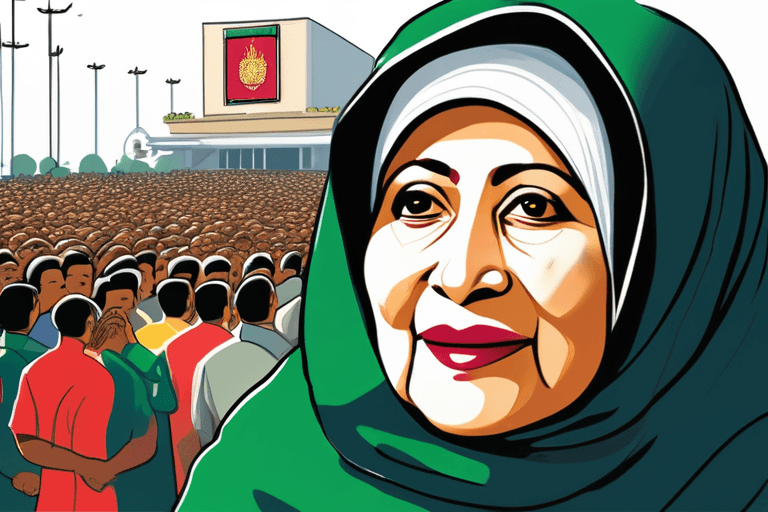
Hundreds of thousands of people gathered in Dhaka, Bangladesh, on Wednesday to mourn the death of Khaleda Zia, the country's first female prime minister, who died on Tuesday at the age of 80 after a prolonged illness. Mourners from across Bangladesh traveled to the capital to pay their final respects as a motorcade carrying Zia's body, draped in the national flag, proceeded through streets near the parliament house.
Flags were flown at half-mast, and thousands of security officers were deployed to manage the crowds. The outpouring of grief underscored Zia's significant impact on Bangladeshi politics and the lives of women in the country. "I have come this far just to say goodbye," said Setara Sultana, an activist from Zia's Bangladesh Nationalist Party (BNP). "I know I won't be able to see her face, but at least I could see the vehicle carrying her for the last rites."
Zia's career marked a turning point for women in Bangladeshi politics, breaking barriers and paving the way for future generations. Sharmina Siraj, a mother of two, described Zia as "an inspiration," highlighting the stipends Zia introduced, which significantly impacted women's education and empowerment.
Khaleda Zia served as prime minister for three terms, beginning in 1991. Her political career was often marked by rivalry with Sheikh Hasina, the current prime minister, creating a complex dynamic in Bangladeshi politics. Despite facing numerous challenges and controversies, including allegations of corruption, Zia remained a prominent figure in the BNP.
Zia's death comes at a time of political tension in Bangladesh, with the BNP playing a key role in the opposition. Her legacy as a female leader who challenged traditional norms continues to resonate, particularly among women who saw her as a symbol of progress and empowerment. The state funeral served as a testament to her enduring influence and the deep respect she commanded from many across the country.




















Discussion
Join the conversation
Be the first to comment