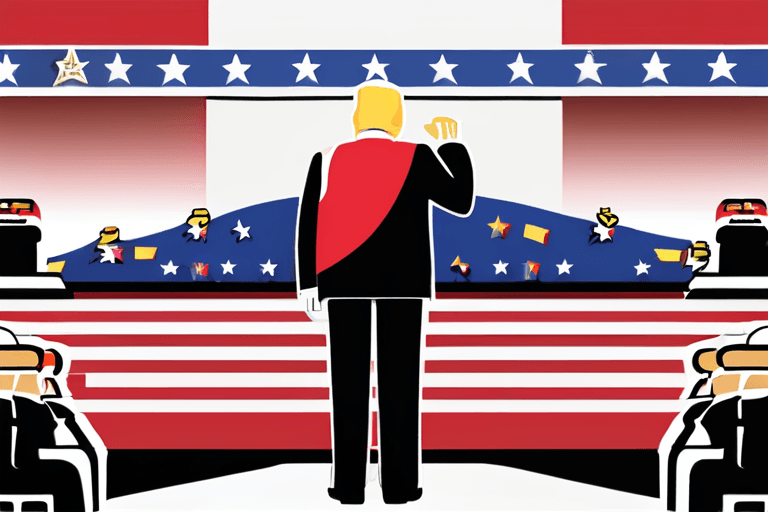
Nearly a week after former U.S. President Donald Trump announced what he described as the first U.S. ground strike in a four-month-long military pressure campaign against Venezuela, details surrounding the operation remain scarce. CNN and The New York Times reported late Monday that the CIA allegedly used a drone to target a port facility purportedly used by the Tren de Aragua street gang.
The alleged drone strike marks a new phase in the ongoing shadow war between the U.S. and Venezuela, a conflict that has intensified since Trump's return to the White House. The Venezuelan government, led by Nicolás Maduro, has yet to officially comment on the alleged attack, maintaining a stance of strategic ambiguity. No casualties were reported, but the date, time and location of the attack remain unknown.
The escalating tensions are rooted in a long history of strained relations between the two nations, exacerbated by U.S. sanctions and accusations of election rigging and human rights abuses against the Maduro regime. The U.S. has long viewed Maduro as an illegitimate leader, backing opposition forces led by figures like Juan Guaidó in the past. However, Maduro has managed to cling to power, bolstered by support from countries like Russia, China, and Cuba.
The situation in Venezuela is further complicated by the country's economic crisis, which has led to widespread poverty, hyperinflation, and mass migration. The Tren de Aragua, a powerful criminal organization, has exploited the instability, expanding its reach both within Venezuela and across the region. The gang's alleged use of port facilities highlights the blurring lines between state and criminal actors in the country.
The U.S. military campaign against Maduro comes after years of failed attempts at diplomatic and economic pressure. Reports indicate that U.S. wargames have explored various scenarios for Maduro's fall, none of which ended well for Venezuela. The current strategy appears to be a gradual escalation of military pressure, aimed at weakening Maduro's grip on power without triggering a full-scale conflict.
The international community remains divided on the issue. While some countries support the U.S. position, others have condemned the intervention as a violation of international law and Venezuela's sovereignty. The situation is likely to further polarize the region and could have far-reaching consequences for the stability of Latin America.


















Discussion
Join the conversation
Be the first to comment