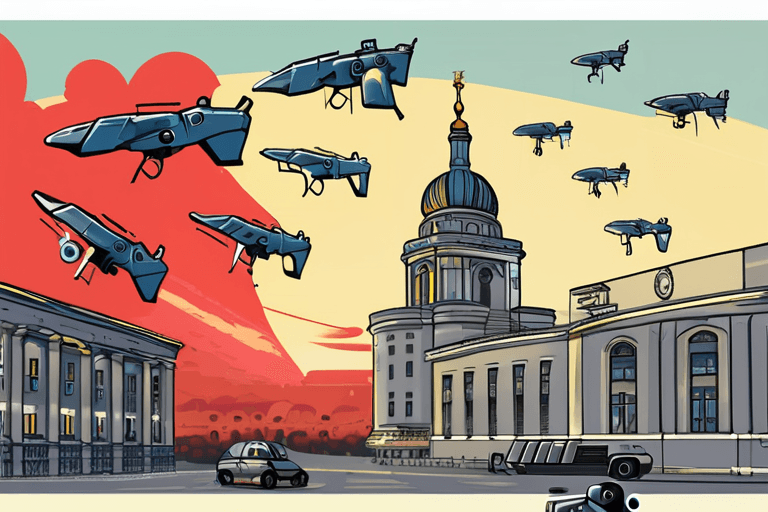
Russian forces reportedly downed five Ukrainian drones en route to Moscow on Thursday evening, according to Moscow Mayor Sergei Sobyanin via Telegram, Reuters reported. The incident occurred amid ongoing conflict, with Ukrainian officials reporting that Russian drones attacked apartment buildings and critical infrastructure in Odesa overnight Wednesday, injuring six people.
These attacks and counter-attacks highlight the continued reliance on drone technology in the Russia-Ukraine war. Drones, often equipped with AI-powered navigation and targeting systems, have become integral to both sides' military strategies. The use of AI in these systems raises ethical questions about autonomous weapons and the potential for unintended consequences. AI algorithms can make decisions faster than humans, but they are also susceptible to errors and biases, potentially leading to civilian casualties or misidentification of targets.
This week, Russian President Vladimir Putin authorized the military to call up reserve soldiers to protect critical infrastructure, according to an official decree. The order also directs the government to determine a list of critically important facilities requiring protection. The Moscow Times reported that this order follows changes to Russian law in November that allow reservists to be called up even during peacetime. This move suggests a heightened concern within Russia regarding the vulnerability of its infrastructure and a proactive approach to bolstering its defenses.
The increasing reliance on AI in warfare also has broader implications for society. As AI systems become more sophisticated, they could potentially be used to automate other aspects of military operations, such as logistics, intelligence gathering, and even combat. This could lead to a shift in the nature of warfare, with machines playing a more prominent role and humans potentially taking a backseat.
Ukrainian President Volodymyr Zelenskyy issued New Year statements, the content of which was not immediately available. The conflict remains ongoing, with both sides employing a range of technologies and strategies. The current status suggests a continuation of the conflict into the new year, with no immediate signs of de-escalation. Future developments will likely depend on a combination of military actions, diplomatic efforts, and the evolving role of AI in the conflict.


















Discussion
Join the conversation
Be the first to comment