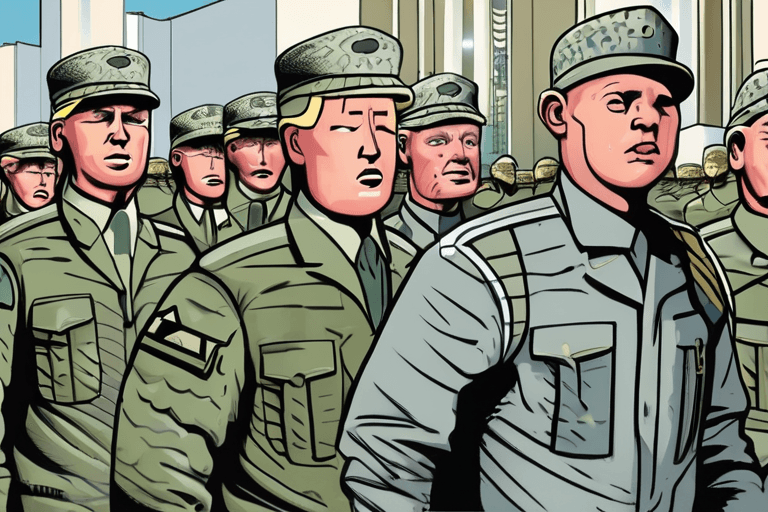
President Donald Trump stated his administration would suspend efforts to deploy National Guard troops to Chicago, Los Angeles, and Portland, Oregon, following legal challenges to previous deployments in these Democratic-led cities. Trump announced the decision in a post on Truth Social on Wednesday, praising the deployments and asserting they had reduced crime rates.
The deployments in Chicago and Portland faced legal blocks in the courts. In California, National Guard members withdrew after criticism from a U.S. District Court judge earlier in December. The Ninth Circuit Court of Appeals ruled on Wednesday that the Trump administration must return control of the Guard to California Governor Gavin Newsom.
The use of federal troops in U.S. cities has sparked debate, raising questions about the balance of power between the federal government and individual states, a recurring theme in the nation's history. Similar debates have occurred in other federal republics, such as Germany and Brazil, where the division of authority between the central government and regional states is a subject of ongoing negotiation.
The situation in the United States reflects a global trend of governments grappling with internal security challenges and the appropriate use of military or paramilitary forces in domestic contexts. In countries like France and Italy, the deployment of military personnel to support law enforcement in response to terrorist threats and social unrest has become more common, albeit under strict legal frameworks.
The legal challenges to the deployments in the U.S. highlight the importance of judicial oversight in safeguarding civil liberties and preventing the overreach of executive power. This principle is enshrined in many democratic constitutions worldwide, including those of India and South Africa, where courts play a crucial role in upholding the rule of law and protecting citizens from potential abuses of power.
The decision to halt the deployments could de-escalate tensions between the Trump administration and the Democratic-led cities. However, the underlying issues of crime, policing, and federal-state relations remain unresolved and are likely to continue to be debated in the coming months.




















Discussion
Join the conversation
Be the first to comment