Drone warfare in Ukraine is undergoing a significant transformation with the introduction of artificial intelligence-powered drones capable of autonomous target engagement. These drones, unlike traditional models requiring constant human control, can independently pursue and strike targets once initially locked on, raising ethical and strategic questions about the future of warfare.
The development and deployment of these AI-driven drones are rapidly changing the dynamics on the battlefield. Recently, a Ukrainian drone pilot known as Lipa, along with his navigator Bober, was tasked with eliminating a Russian drone team operating near the occupied village of Borysivka. Previous attempts to target the team using standard kamikaze quadcopters had failed due to Russian radio-wave jamming, which disrupted the connection between the pilot and the drone.
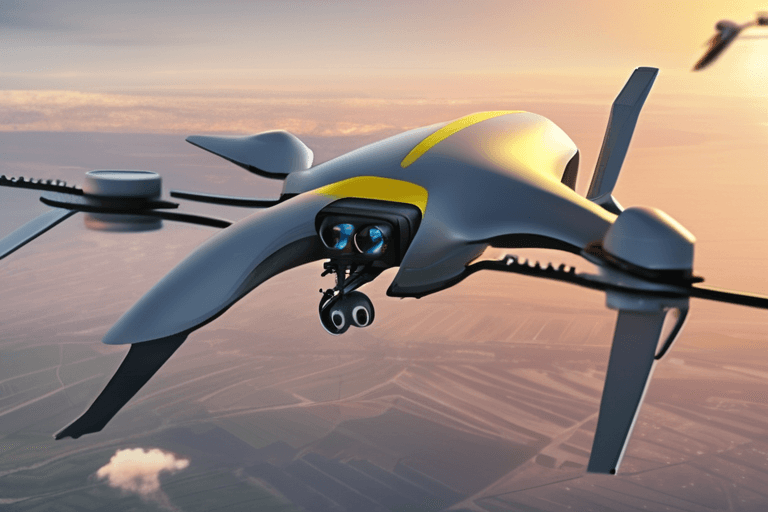
Lipa's mission involved the use of a "Bumblebee" drone, a specialized model equipped with AI capabilities. This drone was provided by a venture led by Eric Schmidt, former chief executive of Google. The Bumblebee represents a new generation of weaponry where AI algorithms enable drones to navigate complex environments and overcome electronic warfare countermeasures without continuous human guidance.
The emergence of autonomous weapons systems in Ukraine highlights the accelerating integration of AI into military technology. Experts suggest that these advancements could lead to more efficient and precise strikes, potentially reducing civilian casualties in some scenarios. However, concerns remain about the potential for unintended consequences and the ethical implications of delegating lethal decisions to machines.
The technology behind these AI drones typically involves sophisticated computer vision algorithms that allow the drone to identify and track targets. These algorithms are trained on vast datasets of images and videos, enabling the drone to distinguish between combatants and non-combatants. Once a target is identified, the drone can autonomously adjust its flight path to maintain lock and deliver its payload, even in the face of jamming or other interference.
The use of AI in drones also raises questions about accountability. If an autonomous drone makes a mistake and harms civilians, it is unclear who should be held responsible. This lack of clear accountability mechanisms is a major concern for human rights organizations and international legal scholars.
The Ukrainian conflict is serving as a testing ground for these advanced weapons systems, providing valuable data and insights into their effectiveness and limitations. The rapid pace of innovation in this field suggests that AI-powered drones will play an increasingly important role in future conflicts.
The development of these technologies is not without controversy. Critics warn of a potential arms race in autonomous weapons, leading to a world where machines make life-or-death decisions without human intervention. They advocate for international regulations and treaties to govern the development and use of AI in warfare, ensuring that human control is maintained over critical functions.
The current status of AI drone deployment in Ukraine remains fluid, with ongoing development and refinement of the technology. As the conflict evolves, the role of these autonomous systems is likely to expand, further shaping the future of warfare and raising profound ethical and strategic challenges.




















Discussion
Join the conversation
Be the first to comment