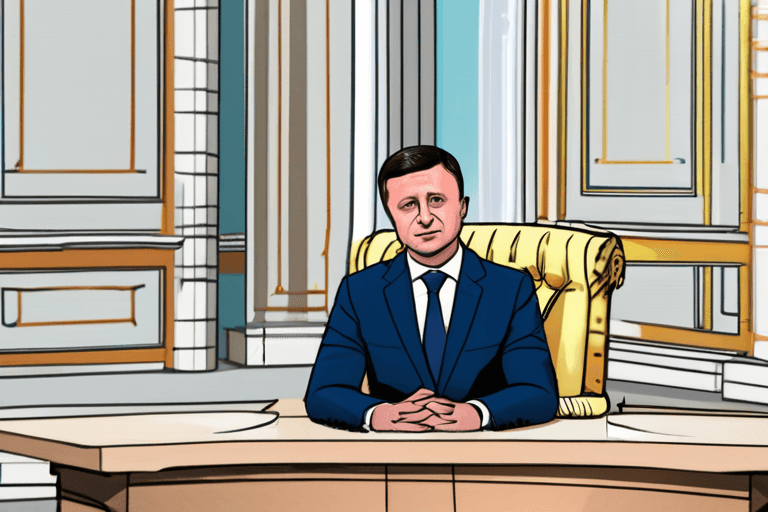
Ukrainian President Volodymyr Zelensky stated in a New Year address that a peace agreement to end the war with Russia is "90% ready." The speech, delivered as Ukraine approaches the fourth year of conflict with Russia, largely centered on the nation's resistance to the full-scale invasion launched by Moscow.
Zelensky indicated that the remaining 10% of the agreement would be decisive, determining "the fate of peace, the fate of Ukraine and Europe." His remarks come as the conflict continues to reshape the geopolitical landscape of Eastern Europe and draw in international actors concerned about regional stability and security.
In his own New Year address, Russian President Vladimir Putin conveyed a message of confidence to his troops, stating, "We believe in you and our victory." This reciprocal messaging highlights the entrenched positions of both leaders and the ongoing challenges in reaching a comprehensive resolution.
Adding to the tensions, Moscow released what it claimed was evidence of Ukraine using drones to target Putin's private residence on Lake Valdai in north-west Russia. The allegations, which Kyiv has vehemently denied, included a map purportedly showing that the drones were launched from the Sumy and Chernihiv regions of Ukraine, as well as video footage of a downed drone. A serviceman in the video identified the wreckage as a Ukrainian Chaklun drone. Independent verification of the footage and its location has not been possible.
The conflict between Ukraine and Russia has deep historical roots, stemming from Ukraine's post-Soviet independence and its aspirations for closer ties with the West, particularly the European Union and NATO. Russia views Ukraine as part of its historical sphere of influence and has resisted what it perceives as Western encroachment. The annexation of Crimea in 2014 and the subsequent conflict in eastern Ukraine's Donbas region marked a significant escalation of tensions, culminating in the full-scale invasion in 2022.
The international community remains divided on the issue, with many Western nations providing military and financial support to Ukraine while condemning Russia's actions. Other countries, particularly in the Global South, have adopted a more neutral stance, emphasizing the need for dialogue and a peaceful resolution to the conflict. The ongoing war has had a devastating impact on Ukraine, causing widespread destruction, displacement, and loss of life. It has also had significant global repercussions, including disruptions to energy and food supplies, contributing to inflationary pressures and exacerbating existing economic challenges.
Russia has indicated it would review its position on the ongoing peace negotiations, though specifics were not provided. The path toward a lasting peace agreement remains uncertain, contingent on both sides making significant concessions and addressing the underlying issues that have fueled the conflict.



















Discussion
Join the conversation
Be the first to comment