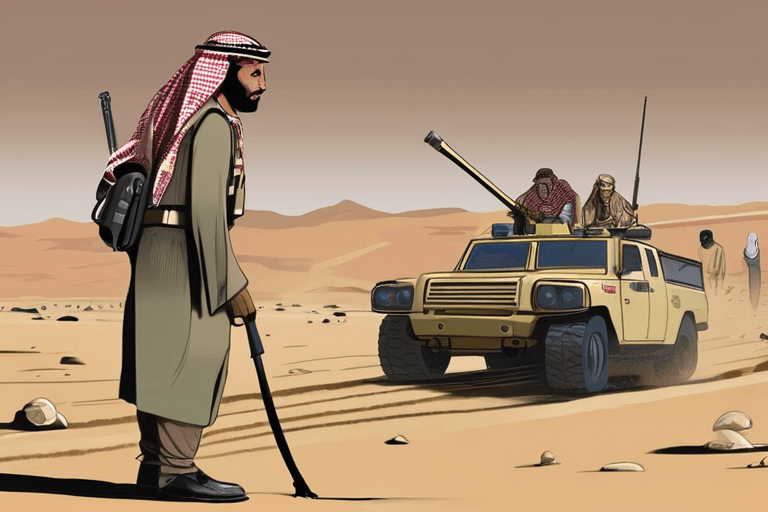
Tensions in Yemen escalated as the Southern Transitional Council (STC) refused to withdraw its forces from the provinces of Hadramout and al-Mahra, which border Saudi Arabia, following a December offensive where they seized control of the resource-rich regions. Rashad al-Alimi, head of Yemen's internationally recognized Presidential Leadership Council, warned that further advances by the southern separatists would have serious consequences for the already fragile stability of the country.
Al-Alimi's warning underscored the deep divisions and ongoing conflict that have plagued Yemen for years. The STC, backed by the United Arab Emirates, seeks self-determination for southern Yemen, a goal that clashes directly with the central government's aim to maintain a unified nation. Riyadh has accused the United Arab Emirates of encouraging the STC's actions, further complicating the regional dynamics.
The conflict in Yemen has its roots in the Arab Spring uprisings of 2011, which led to the ousting of longtime President Ali Abdullah Saleh. A power vacuum ensued, exploited by Houthi rebels who seized control of the capital, Sanaa, in 2014. This prompted a military intervention in 2015 by a Saudi-led coalition aimed at restoring the internationally recognized government. The ensuing war has created one of the world's worst humanitarian crises, with millions facing starvation and displacement.
The STC's presence in Hadramout and al-Mahra is particularly sensitive due to the provinces' strategic importance and proximity to Saudi Arabia. Control of these areas provides access to vital resources and trade routes, potentially altering the balance of power in the region. The situation also raises concerns about the potential for further fragmentation of Yemen, a prospect that worries international observers who fear it could exacerbate regional instability.
The United Nations and other international actors have repeatedly called for a ceasefire and a negotiated settlement to the Yemeni conflict. However, progress has been slow, hampered by deep mistrust and conflicting agendas among the warring parties. The latest developments with the STC refusing to withdraw its forces further complicate these efforts, raising the specter of renewed fighting and further suffering for the Yemeni people. The international community continues to monitor the situation closely, urging restraint and a return to the negotiating table.















Discussion
Join the conversation
Be the first to comment