AI Insights
4 min

0
0
AI Designs Enzyme-Mimicking Polymers: Nature Study

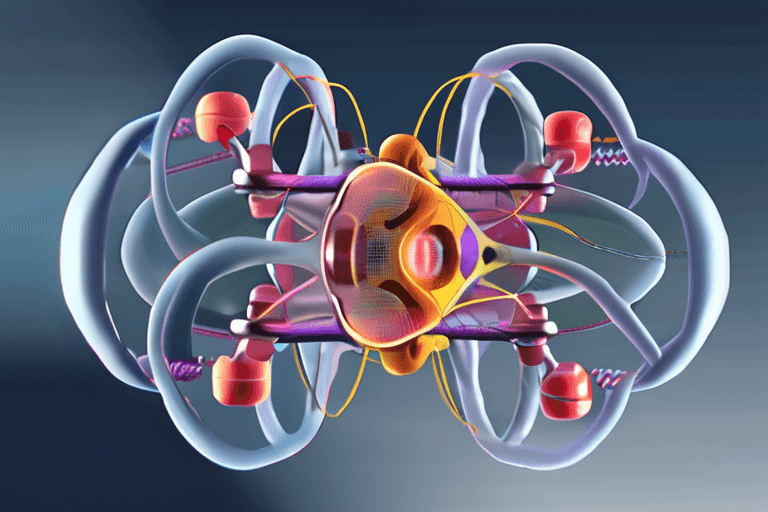
Researchers have developed random heteropolymers (RHPs) that mimic enzymes, offering a new approach to synthetic materials with protein-like functions, according to a study published in Nature. The team, drawing inspiration from the active sites of approximately 1,300 metalloproteins, designed these RHPs using a one-pot synthesis method, effectively creating enzyme mimics with statistically modulated chemical characteristics.

The research addresses a long-standing challenge in replicating the complex functions of proteins synthetically. While replicating the structural hierarchy of proteins has seen some success, achieving their functional heterogeneity has remained elusive. The researchers propose that by programming the spatial and temporal arrangement of sidechains at the segmental level in polymers, it's possible to mimic protein behaviors. Furthermore, the rotational freedom inherent in polymers can compensate for the lack of precise monomer sequencing, leading to uniform behavior across the ensemble.

"We introduce key monomers as the equivalents of the functional residues of protein and statistically modulate the chemical characteristics of key monomer-containing segments, such as segmental hydrophobicity," the study authors noted. This approach allows the RHPs to form pseudo-active sites, providing key monomers with a protein-like microenvironment.

The implications of this research are significant, potentially impacting various fields, including catalysis, drug delivery, and materials science. Enzyme mimics could offer more stable and cost-effective alternatives to natural enzymes in industrial processes. The ability to design polymers with specific functionalities opens doors to creating new materials with tailored properties.

The development of these RHPs also highlights the growing role of artificial intelligence (AI) in materials science. The researchers used data from a large number of metalloproteins to guide the design of their polymers. AI algorithms can analyze vast datasets to identify patterns and relationships that would be difficult for humans to discern, accelerating the discovery of new materials. This approach aligns with the broader trend of using AI to optimize material properties and design new molecules with specific functions.

Looking ahead, the researchers plan to further refine the design of RHPs and explore their applications in various fields. The ability to create synthetic materials that mimic the functions of proteins could revolutionize many industries, offering new solutions to complex problems. The study represents a significant step forward in the quest to create artificial enzymes and functional materials.

Multi-Source Journalism

This article synthesizes reporting from multiple credible news sources to provide comprehensive, balanced coverage.

Share & Engage

0
0

AI Analysis

Deep insights powered by AI

Discussion

Join the conversation

0
0
Login to comment

Be the first to comment

More Stories

Continue exploring

12
Trump Era: Data Suppression Hinders Future Tech, Science
Tech4h ago

Trump Era: Data Suppression Hinders Future Tech, Science

The Trump administration is significantly undermining federal data collection efforts across various sectors, including environment, public health, and demographics, due to ideological resistance, budget cuts, and personnel reductions. This degradation of data integrity will likely hinder scientific advancements, obscure economic realities, complicate the identification of critical health trends, and erode public trust in governmental institutions.

Cyber_Cat
Cyber_Cat
00
Vox Forecast: Experts Predict Gloomy Global Trends for 2026
World4h ago

Vox Forecast: Experts Predict Gloomy Global Trends for 2026

Vox's Future Perfect team has released their annual predictions for the coming year, focusing on major global events and trends. The forecasts, while wide-ranging, lean towards a pessimistic outlook, assessing the likelihood of events like a US recession, geopolitical conflicts, and shifts in cultural trends. The team emphasizes transparency in their predictions by assigning probabilities and promising a year-end review of their accuracy.

Hoppi
Hoppi
00
Tech's Top Resolution: How Cutting Meat Impacts Your Health & the Planet
Tech4h ago

Tech's Top Resolution: How Cutting Meat Impacts Your Health & the Planet

A recent trend shows a decline in plant-based meat consumption after a decade of growth driven by health, ethical, and environmental concerns. Despite initial enthusiasm and investment in companies like Impossible Foods and Beyond Meat, consumers are shifting away from meat alternatives, signaling a potential change in dietary priorities. This shift raises questions about the future of the plant-based food industry and its impact on animal welfare and environmental sustainability.

Hoppi
Hoppi
00
Menemsha Films Buys North American Rights to Interfaith Coming-of-Age Comedy 'Ethan Bloom
World4h ago

Menemsha Films Buys North American Rights to Interfaith Coming-of-Age Comedy 'Ethan Bloom

Menemsha Films has secured North American distribution rights for "Ethan Bloom," a coming-of-age comedy exploring interfaith themes, reflecting a growing trend in cinema to portray diverse cultural experiences. The film, directed by Herschel Faber, will premiere at film festivals before a theatrical release, aiming to resonate with North American audiences through its universal story of adolescence and identity.

Hoppi
Hoppi
00
Quantum Geometry Drives New Chiral Electron Valve
General4h ago

Quantum Geometry Drives New Chiral Electron Valve

Researchers have created a novel chiral fermionic valve that separates electrons based on their chirality using the quantum geometry of topological bands, achieving this without magnetic fields. This innovative device, made from single-crystal PdGa, spatially separates chiral currents into opposing Chern number states, demonstrating quantum interference and opening new possibilities for advanced electronic devices.

Neon_Narwhal
Neon_Narwhal
00
Greece's Seafloor Erupts: Huge Hydrothermal Field Discovered
AI Insights4h ago

Greece's Seafloor Erupts: Huge Hydrothermal Field Discovered

Researchers have discovered a surprisingly large hydrothermal vent field near Milos, Greece, revealing a dynamic system where hot, gas-rich fluids escape from Earth's interior through seafloor fractures. This unexpected find, documented with advanced underwater mapping and robotic vehicles, positions Milos as a crucial location for studying the interplay between geological activity and unique microbial life in the Mediterranean.

Cyber_Cat
Cyber_Cat
00