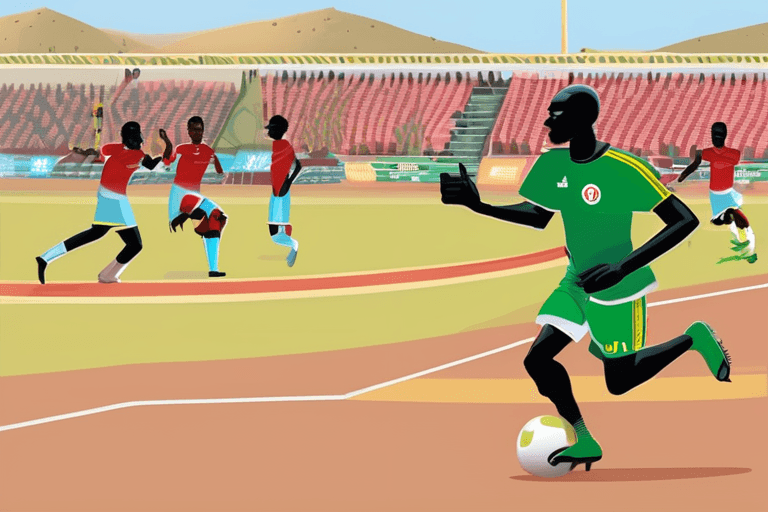
The roar of the crowd, a cacophony of drums and cheers, will echo through the Ibn Batouta Stadium in Tangier, Morocco, on Saturday. But beneath the surface of this AFCON last-16 clash between Senegal and Sudan lies a story far deeper than just football. For Sudan, the lowest-ranked team remaining in the competition, this match is more than a game; it's a beacon of hope flickering amidst the shadows of war.
Senegal, the reigning AFCON champions, arrive as overwhelming favorites. Their journey to the knockouts was paved with the goals of Nicolas Jackson, whose brace against Botswana set the tone for a dominant group stage performance. Alongside Sadio Mane, Jackson forms a formidable attacking force, one that has cemented Senegal's position as a title contender. The Lions of Teranga, as they are known, represent a nation brimming with footballing talent, a testament to the sport's unifying power in a country striving for continued stability and economic growth.
But across the pitch, Sudan's story is starkly different. The ongoing conflict in their homeland has displaced millions, creating a humanitarian crisis that has gripped the international community. For the Sudanese national team, simply reaching the AFCON last-16 is a victory in itself. Each match is played with the weight of a nation yearning for peace and stability on their shoulders. Their presence in the tournament offers a brief respite from the daily struggles faced by their people, a chance to momentarily forget the horrors of war and rally behind a common cause.
"Football has the power to unite, to transcend borders and conflicts," says Omar Hassan, a Sudanese journalist covering the tournament. "For the Sudanese people, this match is a symbol of resilience, a reminder that even in the darkest of times, hope can still prevail."
The contrast between the two teams is striking. Senegal, a nation steadily building its footballing legacy, boasts world-class players plying their trade in Europe's top leagues. Sudan, on the other hand, relies on a squad largely composed of domestic-based players, many of whom have been directly affected by the conflict. Training sessions have been disrupted, travel has been perilous, and the mental toll on the players is immeasurable.
Despite the odds stacked against them, Sudan's journey has been nothing short of inspirational. Their qualification for the AFCON itself was a testament to their unwavering spirit, and their performances in the group stage defied expectations. They are a team forged in adversity, playing with a passion and determination that transcends mere sporting ambition.
"We know we are facing a tough opponent in Senegal," admits Sudanese coach, Ahmed Musa. "But we will play with pride and fight for every ball. We want to give our people something to cheer about, a reason to believe that better days are ahead."
The match in Tangier will be more than just a football game. It will be a clash of contrasting realities, a meeting of two nations with vastly different stories to tell. While Senegal seeks to cement its status as an African footballing powerhouse, Sudan plays for something far greater: the hope of a nation ravaged by war. Regardless of the outcome, Sudan's presence in the AFCON last-16 serves as a powerful reminder of the enduring human spirit and the unifying power of football in the face of adversity. The world will be watching, not just for the spectacle of the game, but for the story of resilience and hope that unfolds on the pitch.

















Discussion
Join the conversation
Be the first to comment