U.S. President Donald Trump vowed to "rescue" Iranian protesters amid widening demonstrations across the Islamic Republic, prompting a sharp rebuke from Tehran warning Washington to stay out of its internal affairs. The exchange occurred Friday as protests, triggered by economic grievances and fueled by anti-government sentiment, entered their sixth day, marking the largest unrest seen in Iran since 2022.
The demonstrations, initially sparked by the collapse of Iran's rial currency, have evolved into widespread expressions of discontent with the country's leadership. At least seven deaths have been reported in the violence surrounding the protests, according to sources within the Iranian government.
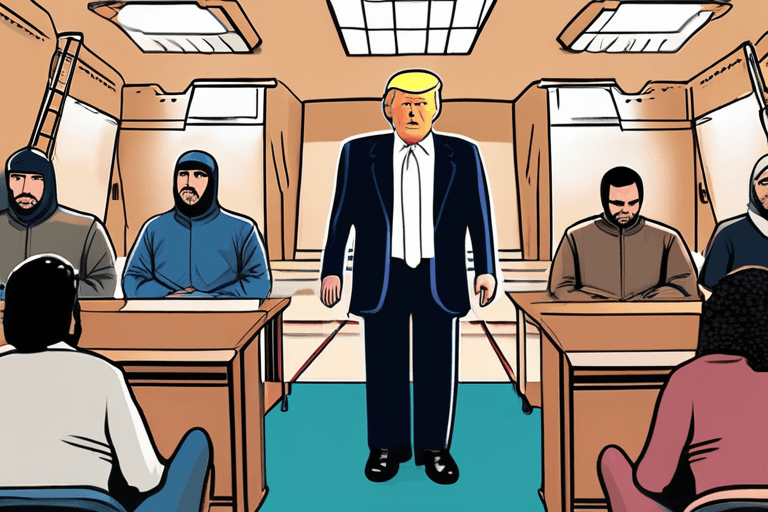
Trump, speaking from Mar-a-Lago in Florida, stated his administration's unwavering support for the Iranian people and condemned the government's response to the protests. "The world is watching," he declared, promising unspecified action to "rescue" those demonstrating for freedom.
In response, Ali Larijani, Secretary of Iran's Supreme National Security Council, issued a stern warning to the U.S., asserting that any intervention would be considered a violation of Iranian sovereignty. "We do not welcome any expression of support from the United States, and we advise them to focus on their own internal problems," Larijani stated in a televised address.
The current unrest follows a period of heightened tensions between the U.S. and Iran, particularly after America's bombing of Iranian nuclear sites in June. The U.S. has long accused Iran of pursuing a nuclear weapons program, a charge Tehran denies. The incident further strained relations already frayed by disagreements over Iran's nuclear program and its role in regional conflicts.
The protests echo similar demonstrations in 2022 sparked by the death of Mahsa Amini in police custody, highlighting persistent grievances related to economic hardship, social restrictions, and political repression within Iran. These issues are compounded by international sanctions and economic pressures.
Analysts suggest the protests present a significant challenge to the Iranian government, testing its ability to manage dissent and maintain stability. The international community is closely monitoring the situation, with many countries urging restraint and calling for respect for the rights of Iranian citizens to peaceful assembly and expression. The European Union issued a statement expressing concern over the violence and calling for dialogue to address the underlying causes of the unrest. The situation remains fluid, with the potential for further escalation depending on the government's response and the extent of international involvement.











Discussion
Join the conversation
Be the first to comment