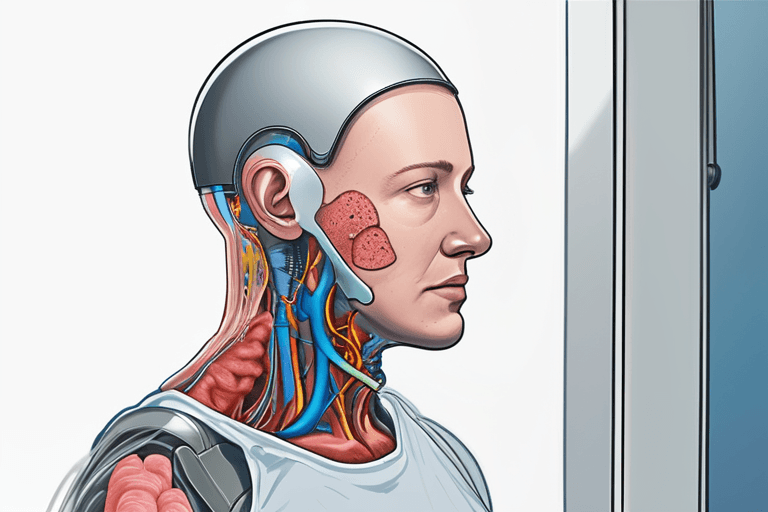
The concept of head transplantation, once relegated to the realm of science fiction, is experiencing renewed interest from life-extension advocates and Silicon Valley startups, despite skepticism surrounding its feasibility. Italian neurosurgeon Sergio Canavero, who gained notoriety in 2017 for claiming a successful head transplant between two corpses in China, has long championed the procedure as a potential solution for aging and debilitating conditions. Canavero's technique involves severing the spinal cords of both the recipient and the donor body, fusing the head to the new body with polyethylene glycol to encourage spinal cord regeneration, and then stimulating the spinal cord with electrical impulses.
Canavero's initial claims were met with considerable doubt from the medical community. The Chicago Tribune, for example, dubbed him the "P.T. Barnum of transplantation." Critics questioned the ethical implications of such a procedure, as well as the technical challenges of reconnecting the spinal cord and preventing immune rejection. "It's become absolutely clear over the past years that the idea of some incredible tech to rejuvenate elderly," Canavero stated, explaining his motivation for pursuing the controversial surgery.
Despite the controversy, Canavero maintains that head transplantation offers a potential solution to aging for which no other viable alternative is currently available. After publishing his surgical ideas a decade ago, Canavero said he was dismissed from Molinette Hospital in Turin, where he had worked for 22 years. "I'm an out-of-the-establishment guy. So that has made things harder, I have to say," he noted.
The procedure raises significant ethical and logistical hurdles. The need for a suitable donor body, the complexities of immune suppression, and the potential for psychological distress in the recipient are all factors that require careful consideration. Furthermore, the long-term functional outcomes of such a transplant remain unknown. While Canavero's initial attempts to gain traction within the established medical community were unsuccessful, the recent resurgence of interest suggests that the underlying concept continues to intrigue researchers and investors. The extent to which this renewed interest will translate into tangible progress remains to be seen, but it signals a continued exploration of radical approaches to life extension and the treatment of currently incurable conditions.














Discussion
Join the conversation
Be the first to comment