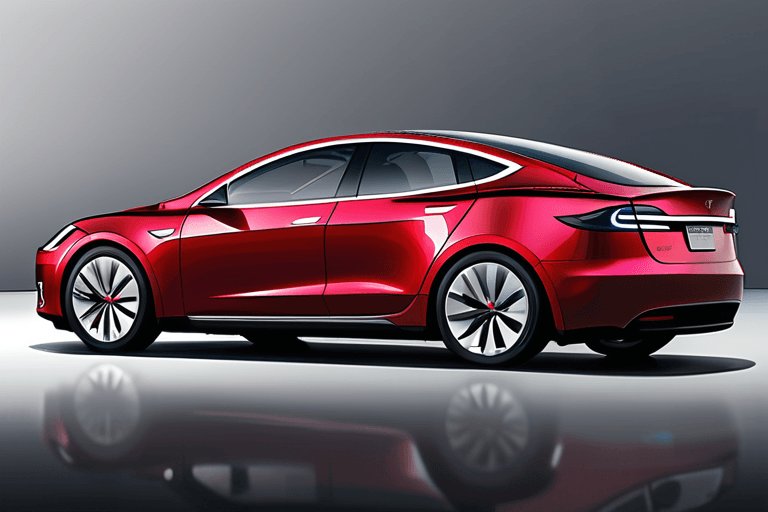
Tesla's annual vehicle deliveries experienced a 9% decline in 2025, totaling 1.63 million units compared to 1.79 million the previous year, according to figures released by the company. This marks the second consecutive year of declining annual sales for the electric vehicle manufacturer.
The drop in sales was attributed to the removal of the U.S. federal tax credit and increased competition from Chinese automakers, particularly BYD, which delivered 2.26 million EVs in 2025, surpassing Tesla as the global EV sales leader. Tesla's fourth-quarter sales also fell short of expectations, with 418,227 vehicles delivered, a 15.6% decrease from the same period last year. This news impacted the company's stock, which fell more than 2% as the market opened after the New Year holiday.
Approximately 50,850 of the vehicles delivered in 2025 were classified as "other models," encompassing the Cybertruck, Model X, and Model S. The Cybertruck, in particular, has faced production challenges, contributing to the overall sales figures.
The $7,500 U.S. federal tax incentive's elimination appears to have significantly impacted fourth-quarter sales, particularly in the United States. While Chinese automakers are currently barred from selling vehicles in the U.S., Tesla faces increasing competition from other EV manufacturers in the domestic market.
Tesla's market share in Europe and China has also been eroded by the rise of Chinese competitors like BYD. BYD's success is attributed to its competitive pricing and a diverse range of EV models catering to various consumer segments. The company's technological advancements in battery technology and manufacturing processes have also contributed to its growth.
Analysts suggest that Tesla needs to introduce new, more affordable models to compete effectively with BYD and other emerging EV manufacturers. The company's focus on high-end vehicles has limited its appeal to a broader consumer base. Future developments will likely involve Tesla's efforts to ramp up Cybertruck production, expand its charging infrastructure, and potentially introduce new vehicle models to regain market share.














Discussion
Join the conversation
Be the first to comment