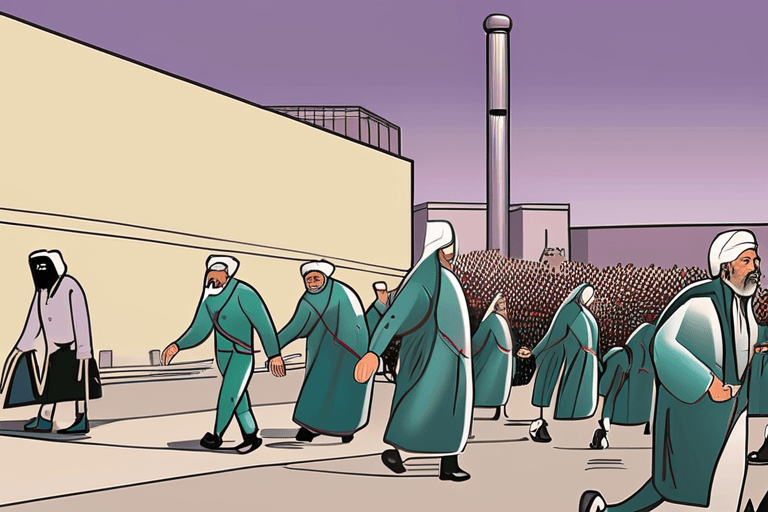
U.S. President Donald Trump vowed to "rescue" Iranian protesters amid widening demonstrations across the Islamic Republic, prompting a sharp rebuke from Tehran warning Washington to stay out of its internal affairs. The exchange occurred Friday as protests, triggered by economic grievances and fueled by anti-government sentiment, entered their sixth day, marking the largest unrest seen in Iran since 2022.
The protests initially erupted in response to the continued decline of Iran's rial currency and broader economic hardship, but have since evolved to include explicit calls for regime change. At least seven deaths have been reported in connection with the demonstrations, according to sources within Iran, though independent verification remains difficult due to restrictions on international media access.
Trump, speaking from Mar-a-Lago in Florida, stated his administration's unwavering support for the Iranian people and condemned the government's response to the protests. "The world is watching," he declared, adding, "We will not stand by as the Iranian regime cracks down on its own citizens. We will rescue them."
In response, Ali Larijani, Secretary of Iran's Supreme National Security Council, issued a stern warning to the U.S., asserting that any form of intervention would be met with a decisive response. "Iran is capable of managing its own internal affairs," Larijani stated in a televised address. "We advise the United States to refrain from any actions that could further destabilize the region."
The current unrest follows a period of heightened tensions between the U.S. and Iran, particularly after the U.S. military bombed Iranian nuclear sites in June. This action further strained relations already fractured by the collapse of the 2015 nuclear deal and the reimposition of U.S. sanctions. The nuclear deal, formally known as the Joint Comprehensive Plan of Action (JCPOA), had offered Iran sanctions relief in exchange for curbs on its nuclear program. The U.S. withdrawal from the JCPOA under the Trump administration in 2018 and the subsequent reinstatement of sanctions have significantly impacted Iran's economy.
The protests also come against a backdrop of simmering discontent within Iran over economic inequality, corruption, and limited social freedoms. The death of Mahsa Amini in police custody in 2022, after being arrested for allegedly violating the country's strict dress code, sparked widespread outrage and fueled earlier protests.
Analysts suggest that the current situation presents a complex challenge for the international community. While many countries express concern over the Iranian government's response to the protests, there is also widespread apprehension about potential external interference that could further destabilize the region. The European Union has called for restraint from all sides and urged the Iranian government to respect the rights of its citizens to peaceful assembly and freedom of expression.
The situation remains fluid, with protests continuing in several cities across Iran. The government has restricted access to social media platforms in an attempt to control the flow of information. The coming days are likely to be critical in determining the trajectory of the protests and the broader implications for Iran and the region.







Discussion
Join the conversation
Be the first to comment