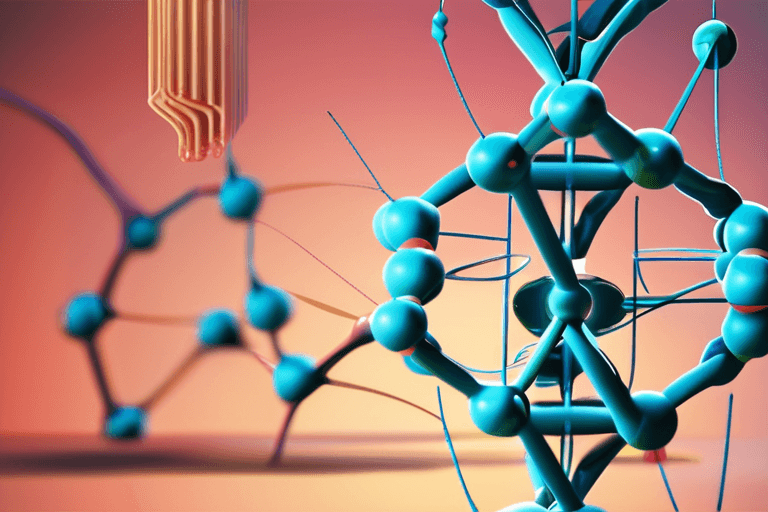
Researchers have developed synthetic polymers that mimic the function of enzymes, potentially revolutionizing industrial catalysis and drug development, according to a study published in Nature. The team focused on creating random heteropolymers (RHPs) capable of replicating the active sites of metalloproteins, which are proteins containing metal ions that play crucial roles in biological processes.
The research addresses a long-standing challenge in materials science: replicating the complex functions of proteins using synthetic materials. While scientists have made progress in mimicking the structural hierarchy of proteins, achieving similar functional complexity has remained elusive. The team's approach involved designing RHPs with specific chemical characteristics, guided by the analysis of over 1,300 metalloprotein active sites. They introduced key monomers, acting as equivalents of functional amino acid residues in proteins, and statistically modulated the chemical properties of segments containing these monomers, such as segmental hydrophobicity, or water-repelling properties.
"We propose that for polymers with backbone chemistries different from that of proteins, programming spatial and temporal projections of sidechains at the segmental level can be effective in replicating protein behaviours," the researchers stated in their paper. The resulting RHPs form pseudo-active sites, providing key monomers with protein-like microenvironments, enabling them to perform catalytic functions.
The significance of this development lies in its potential to overcome limitations associated with natural enzymes. Natural enzymes are often expensive to produce, sensitive to environmental conditions, and difficult to modify for specific applications. Synthetic enzyme mimics, on the other hand, can be designed and synthesized more easily, are often more robust, and can be tailored to specific needs.
The design of these RHPs leverages the rotational freedom of polymers to compensate for the lack of precise monomer sequencing found in proteins. This allows for the creation of materials with uniform behavior at the ensemble level, even without perfect sequence control. The researchers used a one-pot synthesis method, simplifying the production process and making it more scalable.
The implications of this research extend to various fields. In industrial catalysis, RHPs could replace or augment traditional metal catalysts, leading to more efficient and sustainable chemical processes. In drug development, they could be used to create novel therapeutic agents or drug delivery systems. The development also highlights the growing role of artificial intelligence (AI) in materials science. The analysis of metalloprotein active sites, which guided the design of the RHPs, involved the use of computational tools and databases, demonstrating how AI can accelerate the discovery of new materials.
Looking ahead, the researchers plan to further refine the design of RHPs and explore their applications in different areas. They also aim to develop AI-driven methods for predicting the properties of RHPs, which could further accelerate the discovery process. The ability to create synthetic enzyme mimics with tailored properties opens up new possibilities for addressing challenges in various fields, from energy and environment to medicine and manufacturing.


















Discussion
Join the conversation
Be the first to comment