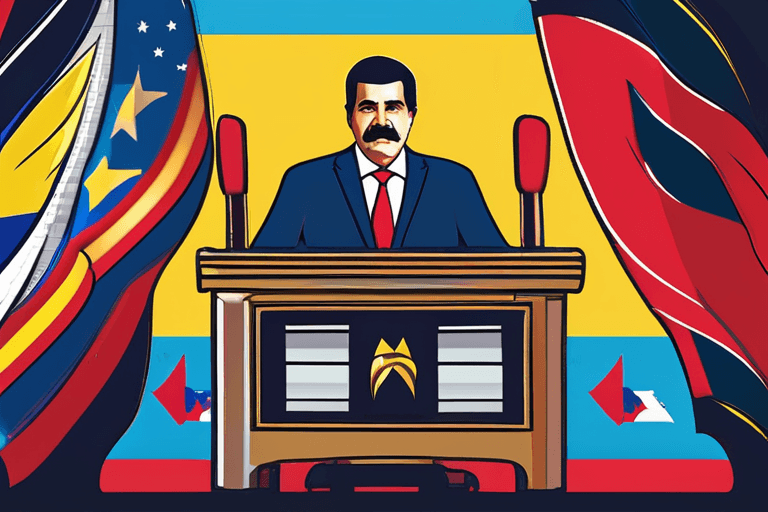
Nicolás Maduro, the former bus driver who rose to become president of Venezuela, was reportedly captured Saturday during what U.S. officials described as an operation in the nation's capital. The announcement of Maduro's capture came in a social media post from U.S. President Donald Trump early Saturday morning.
Venezuelan Vice President Delcy Rodríguez later stated that the whereabouts of Maduro and his wife, Cilia Flores, were unknown. U.S. Attorney General Pam Bondi indicated that Maduro and Flores would face charges in New York, following an indictment.
Maduro's reported capture marks the culmination of increased U.S. pressure over recent months. Throughout his presidency, Maduro frequently accused the U.S. government of plotting to invade Venezuela and dismantle the socialist revolution initiated by his predecessor, Hugo Chávez, in 1999. Similar to Chávez, Maduro consistently portrayed the United States as Venezuela's primary adversary, criticizing both Democratic and Republican administrations for their efforts to promote democratic principles in the country.
Maduro's political involvement began four decades ago. In 1986, he traveled to Cuba for training, according to sources familiar with his early career. His rise to power saw him transition from a unionized bus driver to a prominent political figure, eventually assuming the presidency. His tenure, however, was marked by a significant economic downturn in Venezuela, leading to widespread shortages and political instability. The U.S. government has long maintained that Maduro's policies contributed to the country's economic woes and democratic backsliding. The Venezuelan government has consistently refuted these claims, attributing the nation's difficulties to external interference and economic sanctions. The situation remains fluid, and further details are expected as events unfold.













Discussion
Join the conversation
Be the first to comment