Researchers have developed a novel method for separating electrons based on their chirality, a property related to their spin, using the quantum geometry of topological bands in a non-magnetic material. This breakthrough, detailed in a recent Nature publication, paves the way for new electronic devices that manipulate electron flow without the need for magnetic fields, which are typically required for such control.
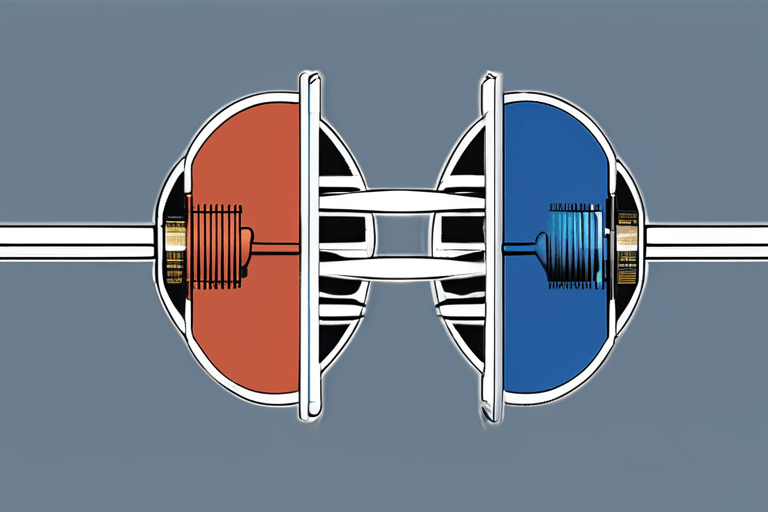
The team, whose members are not named in the provided abstract, fabricated devices from single-crystal palladium gallium (PdGa) in a three-arm geometry. These devices exhibited a nonlinear Hall effect, a phenomenon where the electrical current is not proportional to the applied voltage, due to the quantum-geometry-induced anomalous velocities of chiral fermions. This resulted in the spatial separation of transverse chiral currents with opposite anomalous velocities into the outer arms of the device.
"This allows for the real-space separation of currents with opposite fermionic chiralities," the study authors wrote, "which we have demonstrated by observing their quantum interference in the absence of any magnetic field."
Topological semimetals, the materials used in this research, host fermions with opposite chiralities at topological band crossings. Traditionally, controlling chiral fermionic transport in these systems required strong magnetic fields or magnetic dopants to suppress unwanted transport and create an imbalance in the occupancy of states with different Chern numbers, a topological property related to the electron's quantum mechanical phase. This new approach utilizes the quantum geometry of the topological bands to filter fermions by chirality into distinct Chern-number-polarized states, offering a more efficient and potentially less energy-intensive method.
The implications of this research extend to the development of advanced electronic and spintronic devices. By separating electrons based on their chirality without magnetic fields, it becomes possible to create new types of sensors, switches, and other electronic components. Furthermore, the separated chiral currents also carry orbital magnetizations with opposite signs, opening possibilities for manipulating magnetic properties at the nanoscale.
The researchers suggest that future work will focus on optimizing the device design and exploring other materials with similar topological properties to further enhance the performance and broaden the applicability of this chiral fermionic valve. The absence of magnetic fields in this technology could lead to smaller, faster, and more energy-efficient electronic devices.


















Discussion
Join the conversation
Be the first to comment