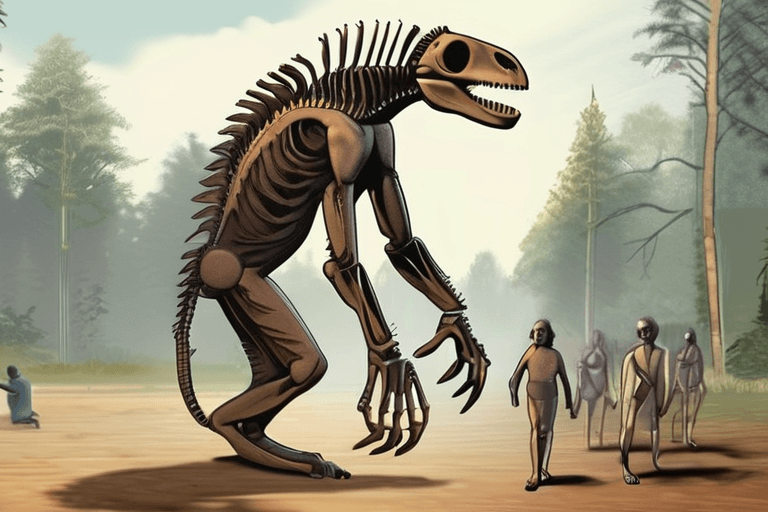
Anthropologists announced a new study providing strong evidence that a seven-million-year-old fossil, Sahelanthropus tchadensis, was bipedal, potentially rewriting the understanding of human origins. The research, conducted by scientists at New York University and the University of Alabama Birmingham, suggests that this ancient hominin, despite its ape-like features and small brain, possessed the ability to walk upright.
The study focused on anatomical evidence, specifically a ligament attachment on the femur that is characteristic of bipedal locomotion in human ancestors. According to Scott Williams of NYU, the presence of this feature indicates that Sahelanthropus tchadensis likely moved with confidence on two legs. This finding places bipedalism much closer to the root of the human family tree than previously thought.
For decades, the question of whether Sahelanthropus tchadensis could walk upright has been a subject of intense debate among researchers. The fossil, discovered in Chad, dates back approximately seven million years, a period crucial for understanding the divergence between humans and apes. If confirmed as bipedal, Sahelanthropus tchadensis would represent the earliest known human ancestor exhibiting this key trait.
Jason Heaton of the University of Alabama Birmingham emphasized the significance of this discovery, stating that it challenges existing models of human evolution. The traditional view held that bipedalism evolved later in hominins with larger brains and more human-like features. This new evidence suggests that upright walking may have emerged earlier and in a more ape-like ancestor.
The implications of this finding extend beyond the scientific community. Understanding the origins of bipedalism sheds light on the selective pressures that shaped human evolution. It raises questions about the environment in which Sahelanthropus tchadensis lived and the advantages that upright walking may have conferred.
Further research is planned to analyze additional skeletal remains of Sahelanthropus tchadensis and to compare its anatomy with that of other early hominins. Scientists hope to gain a more complete picture of the evolution of bipedalism and its role in the emergence of humanity. The study was published in a recent issue of a peer-reviewed scientific journal.


















Discussion
Join the conversation
Be the first to comment