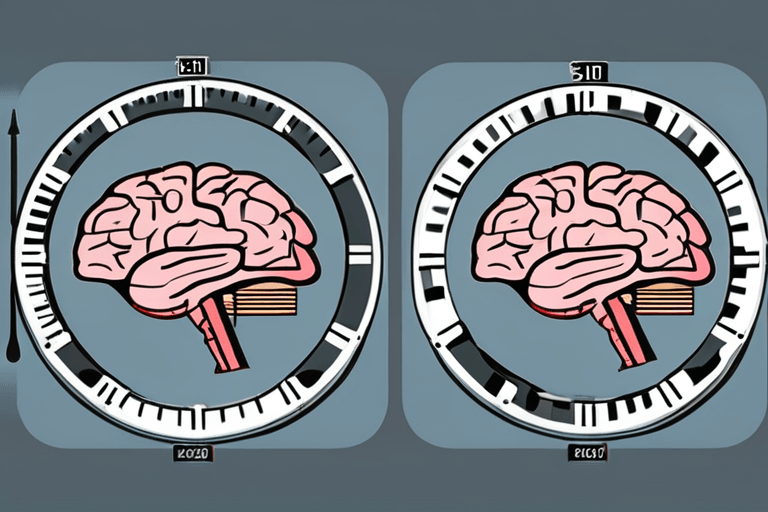
New research from Rutgers University indicates that the human brain employs a complex, multi-speed timing system to integrate rapid reactions with slower, more deliberate thought processes. Published January 3, 2026, the study reveals that different brain regions operate on distinct internal clocks and depend on white matter connections to transmit information across these varying timescales.
The efficiency with which the brain coordinates these timing systems appears to influence cognitive flexibility, efficiency, and overall mental capacity, according to the research. Scientists found that the organization of this timing mechanism affects how effectively the brain transitions between activity patterns associated with behavior. These differences in the timing system may contribute to the variations observed in cognitive abilities among individuals.
The brain constantly juggles information arriving at different speeds, blending split-second reactions with more reflective processing. This intricate coordination is crucial for everyday tasks, from making quick decisions to engaging in complex problem-solving. The study highlights the critical role of white matter, the brain's communication network, in synchronizing these disparate internal clocks.
"Our findings suggest that the brain's ability to think clearly depends on how well it syncs fast reactions with slow, reflective processing," stated a lead researcher from Rutgers University. The research team believes that a deeper understanding of this timing system could provide insights into cognitive disorders and potentially lead to new therapeutic interventions.
The implications of this research extend to the field of artificial intelligence, particularly in the development of more sophisticated AI systems. Current AI models often struggle to replicate the nuanced timing and integration of information that the human brain achieves effortlessly. By understanding the brain's timing mechanisms, researchers hope to design AI systems that can process information more efficiently and adaptively.
Further research is planned to investigate how this timing system changes with age and how it is affected by neurological conditions. Scientists are also exploring the potential for using brain stimulation techniques to enhance the coordination of these internal clocks and improve cognitive function. The ongoing work aims to unravel the complexities of the brain's timing system and its impact on human thought and behavior.

















Discussion
Join the conversation
Be the first to comment