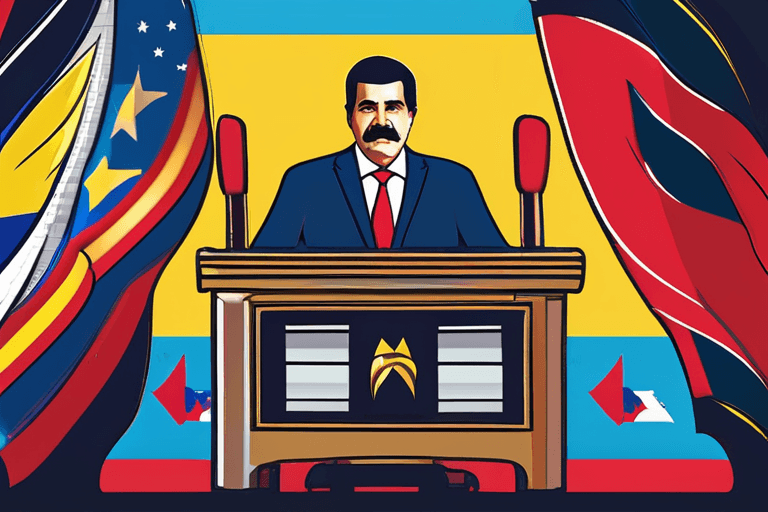
The air crackled with anticipation, not just in the CBS studios, but across a nation glued to their screens. Tony Dokoupil, the newly appointed anchor of "CBS Evening News," found himself thrust into the hot seat sooner than expected. A geopolitical earthquake – a U.S. military intervention in Venezuela and the dramatic extraction of President Nicolás Maduro – had ripped through the weekend, demanding immediate and comprehensive coverage. Dokoupil's debut wasn't going to be a carefully orchestrated launch; it was a baptism by fire.
The world of broadcast journalism in 2026 is a landscape reshaped by artificial intelligence. AI algorithms now assist in everything from news gathering and fact-checking to crafting on-screen graphics and even suggesting interview questions. The speed and efficiency AI provides are undeniable, but the ethical considerations are paramount. How do we ensure AI-driven news remains objective and unbiased? How do we prevent the spread of AI-generated misinformation, deepfakes that can further destabilize already volatile situations?
Dokoupil's first act as anchor was a lengthy interview with Pete Hegseth, a commentator known for his strong opinions and conservative leanings. The choice raised eyebrows. In an era where AI-powered sentiment analysis can instantly gauge public reaction to every word spoken, the decision to feature a potentially polarizing figure so prominently was a bold one. Was it a calculated move to attract a wider audience, or a genuine attempt to present diverse perspectives on a complex international crisis?
"The challenge for any news anchor today," explains Dr. Anya Sharma, a professor of media ethics at Stanford University, "is navigating the AI-driven information ecosystem. AI can help us understand audience preferences and tailor content accordingly, but it can also create echo chambers and reinforce existing biases. The human element – the judgment, the critical thinking, the commitment to truth – remains essential."
The Hegseth interview itself was a masterclass in navigating the AI-enhanced news environment. Dokoupil, armed with real-time data on audience engagement and potential misinformation triggers flagged by AI systems, pressed Hegseth on his assertions, challenging him to provide evidence and context. The result was a dynamic and informative exchange, one that demonstrated the potential for AI to enhance, rather than replace, human journalistic skill.
The implications of AI in journalism extend far beyond the anchor desk. AI-powered tools are now being used to generate news reports automatically, to translate articles into multiple languages instantly, and to personalize news feeds for individual users. While these advancements offer unprecedented opportunities to inform and engage the public, they also raise concerns about job displacement and the potential for algorithmic bias.
Looking ahead, the future of news is likely to be a hybrid one, where AI and human journalists work together to deliver accurate, insightful, and engaging content. The key will be to harness the power of AI responsibly, ensuring that it serves the public interest and upholds the values of journalistic integrity. Tony Dokoupil's debut on "CBS Evening News," though born out of crisis, offered a glimpse into this future, a future where human judgment and AI intelligence must coexist to inform a world in constant flux.


















Discussion
Join the conversation
Be the first to comment