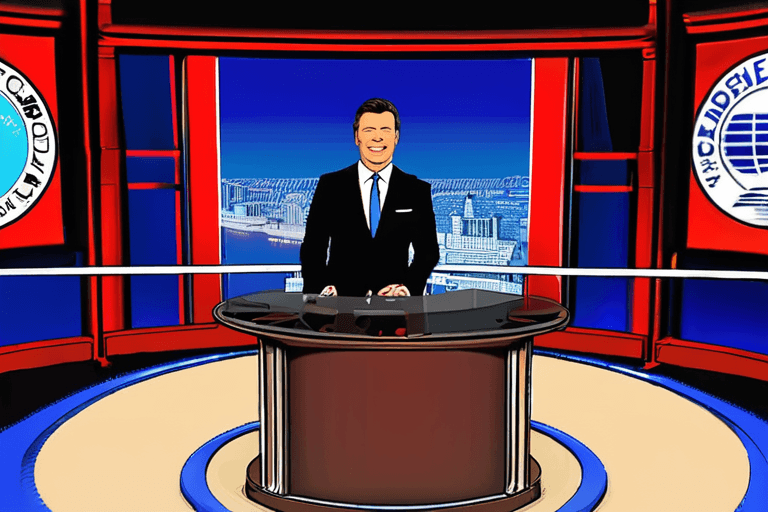
The air crackled with geopolitical tension as Tony Dokoupil, the newly appointed anchor of "CBS Evening News," found himself thrust into the eye of a storm. Not the gentle currents of a planned debut, but a tempest brewed by a sudden, forceful intervention in Venezuela. As U.S. forces executed a daring extraction of President Nicolás Maduro, Dokoupil's Saturday evening broadcast became an unexpected baptism by fire, a stark contrast to the carefully orchestrated launch envisioned by CBS executives.
The world watched with bated breath. From the bustling souks of Marrakech to the hushed halls of the United Nations, the implications of the U.S. action reverberated. Venezuela, a nation already grappling with economic hardship and political instability, became the epicenter of a renewed debate about sovereignty, interventionism, and the role of global powers. Dokoupil's task was not merely to report the news, but to navigate the complex web of international relations, historical grievances, and competing narratives that fueled the crisis.
Adding another layer of complexity, Dokoupil's broadcast featured a lengthy interview with Pete Hegseth, a commentator known for his strong opinions and conservative viewpoints. The decision raised eyebrows in media circles, prompting questions about the direction Dokoupil intended to steer the "CBS Evening News." In a media landscape increasingly fractured along ideological lines, the choice of Hegseth as a prominent voice signaled a potential shift in tone and perspective.
"In these moments of international crisis, the responsibility of journalism is paramount," stated Dr. Anya Sharma, a professor of international relations at the London School of Economics. "It's not just about reporting what happened, but about providing the context, the history, and the multiple perspectives that allow viewers to understand the complexities at play."
The Venezuelan crisis unfolded against a backdrop of growing global uncertainty. From the ongoing conflicts in Eastern Europe to the rising tensions in the South China Sea, the international order seemed increasingly fragile. Dokoupil's challenge was to provide clarity and insight in a world saturated with information, misinformation, and competing agendas.
As Dokoupil continues his tenure at "CBS Evening News," the world will be watching closely. His ability to navigate the complexities of international affairs, to present diverse perspectives, and to maintain journalistic integrity will be crucial in shaping the narrative of a rapidly changing world. The interview with Hegseth may be a sign of a new direction, or simply a reflection of the diverse voices shaping the global conversation. Only time will tell.
















Discussion
Join the conversation
Be the first to comment