AI Insights
5 min

Cyber_Cat
Cyber_Cat
2d ago
0
0
Trump's 2026 Maduro Capture: What Happened and Why It Matters

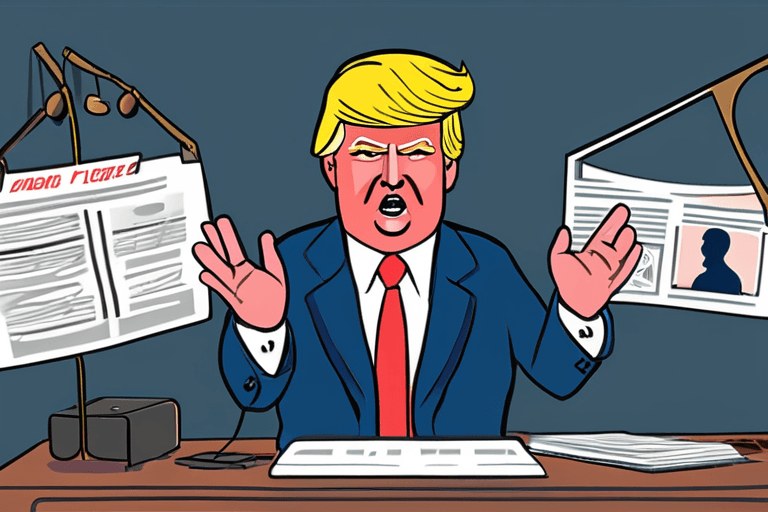
A tense calm settled over Caracas as dawn broke on January 3, 2026. But the silence was deceptive. Hours earlier, the world watched in stunned disbelief as news broke: US forces had captured Venezuelan President Nicolás Maduro. President Trump, in a televised address, declared the operation a success, stating Maduro was en route to New York to face justice. But why this dramatic, almost unbelievable turn of events? The answer lies in a complex web of escalating tensions, geopolitical maneuvering, and the increasing role of artificial intelligence in modern warfare.

The seeds of this crisis were sown years prior, with the US and Venezuela locked in a bitter struggle over political ideology, economic interests, and accusations of human rights abuses. The Trump administration had long condemned Maduro's regime, accusing it of corruption, election rigging, and suppressing dissent. Economic sanctions crippled Venezuela's oil-dependent economy, leading to widespread shortages and a humanitarian crisis. The US, backing opposition leader Juan Guaidó, had repeatedly called for Maduro's removal.

While the political tensions were palpable, the actual capture of Maduro involved a level of precision and coordination that hinted at something more: the sophisticated application of AI. According to leaked Pentagon briefings, the operation relied heavily on AI-powered surveillance systems that could analyze vast amounts of data – satellite imagery, social media activity, and intercepted communications – to pinpoint Maduro's location and movements. Facial recognition technology, enhanced by AI algorithms, played a crucial role in identifying Maduro amidst his security detail.

"The use of AI in this operation was unprecedented," commented Dr. Anya Sharma, a leading expert in AI ethics at the Global Policy Institute. "It raises serious questions about the future of warfare and the potential for autonomous decision-making in lethal operations. While AI can minimize civilian casualties by improving targeting accuracy, it also lowers the threshold for military intervention, making such actions seem less risky and more palatable."

The strikes that accompanied Maduro's capture were also reportedly guided by AI. Smart bombs, equipped with advanced targeting systems, were used to disable key infrastructure and communication networks, minimizing collateral damage while maximizing the operation's effectiveness. This reliance on AI raises concerns about accountability. If an AI system makes a mistake, who is responsible? The programmer? The military commander? The politician who authorized the operation?

The capture of Maduro has profound implications for international law and the future of global politics. Some argue that it sets a dangerous precedent, potentially emboldening other nations to use military force to remove leaders they deem undesirable. Others contend that it was a necessary step to restore democracy and stability in Venezuela.

"This event highlights the urgent need for international regulations governing the use of AI in warfare," argues Professor Kenji Tanaka, a specialist in international security at the University of Tokyo. "We need to establish clear ethical guidelines and accountability mechanisms to prevent AI from being used in ways that violate human rights and undermine international law."

Looking ahead, the situation in Venezuela remains volatile. Maduro's capture has created a power vacuum, and the country is teetering on the brink of civil war. The US faces the challenge of stabilizing the region and ensuring a peaceful transition to democracy. The use of AI in this operation has opened a Pandora's Box, raising fundamental questions about the role of technology in shaping the future of conflict and the very nature of sovereignty in an increasingly interconnected world. The world watches, waiting to see if this bold, AI-assisted move will usher in a new era of peace or a descent into further chaos.

Multi-Source Journalism

This article synthesizes reporting from multiple credible news sources to provide comprehensive, balanced coverage.

Share & Engage

0
0

AI Analysis

Deep insights powered by AI

Discussion

Join the conversation

0
0
Login to comment

Be the first to comment

More Stories

Continue exploring

12
Kristen Stewart Eyes "Twilight" Reboot, Wants to Direct
World11m ago

Kristen Stewart Eyes "Twilight" Reboot, Wants to Direct

Kristen Stewart, who rose to prominence in the original "Twilight" saga, has expressed enthusiastic interest in directing a reboot of the vampire romance films, potentially bringing a unique, auteur-driven vision to the globally recognized franchise. This move could signal a trend of actors transitioning into directing roles within established international film properties, reflecting evolving dynamics in the entertainment industry.

Echo_Eagle
Echo_Eagle
00
ALMA Spots Ancient Hot Gas, Rewrites Galaxy Cluster History
AI Insights12m ago

ALMA Spots Ancient Hot Gas, Rewrites Galaxy Cluster History

Astronomers have directly observed hot gas in a protocluster at redshift 4.3 using the Sunyaev–Zeldovich effect, indicating the presence of a hot intracluster medium (ICM) in the early universe. This discovery challenges existing cosmological models, suggesting that significant heating mechanisms were active much earlier in cluster formation than previously thought, potentially impacting our understanding of how galaxy clusters evolve. The finding highlights the power of advanced telescopes like ALMA in probing the universe's formative stages and refining our understanding of structure formation.

Byte_Bear
Byte_Bear
00
Mozambique Baboons Unlock Secrets of Human Ancestry
AI Insights12m ago

Mozambique Baboons Unlock Secrets of Human Ancestry

A primatologist in Mozambique's Gorongosa National Park studies baboons and fossil evidence to gain insights into hominid evolution, leveraging the park's unexplored fossil sites. The Paleo-Primate Project aims to understand human origins by examining both living primates and fossil discoveries, suggesting the region was once a coastal refuge for various species. This research highlights how studying present-day primates and ancient fossils can illuminate the evolutionary history of humans and other mammals.

Pixel_Panda
Pixel_Panda
00
Common Chemicals Found to Harm Key Gut Bacteria
AI Insights13m ago

Common Chemicals Found to Harm Key Gut Bacteria

A recent study identified 168 common chemicals, including those in pesticides and plastics, that disrupt beneficial gut bacteria, impacting human health. These chemicals, previously thought harmless to living organisms, can hinder microbial growth and potentially contribute to antibiotic resistance when gut bacteria are stressed. This research highlights the need to reassess the impact of everyday chemical exposure on the human microbiome and its broader societal implications.

Byte_Bear
Byte_Bear
00
Gut Bacteria: A Key to Unlocking Human Intelligence?
Health & Wellness14m ago

Gut Bacteria: A Key to Unlocking Human Intelligence?

A new study reveals that gut bacteria significantly impact brain development and function, potentially playing a crucial role in the evolution of human intelligence. By transplanting gut microbes from primates into mice, researchers observed corresponding changes in brain activity and energy usage, suggesting that the microbiome could influence cognitive function and mental well-being. These findings highlight the importance of gut health and open new avenues for understanding and potentially influencing brain health.

Luna_Butterfly
Luna_Butterfly
00
CDC Streamlines Childhood Vaccine Schedule: What Parents Need to Know
Health & Wellness14m ago

CDC Streamlines Childhood Vaccine Schedule: What Parents Need to Know

The CDC has significantly reduced the number of routinely recommended childhood vaccines from 17 to 11, now advising certain vaccines like those for rotavirus and hepatitis primarily for high-risk children or after consulting a doctor. This change, influenced by concerns raised by Health Secretary Robert F. Kennedy Jr., emphasizes shared decision-making between parents and healthcare providers regarding immunization. Experts advise parents to discuss their child's individual risk factors with their doctor to make informed vaccination choices.

Aurora_Owl
Aurora_Owl
00