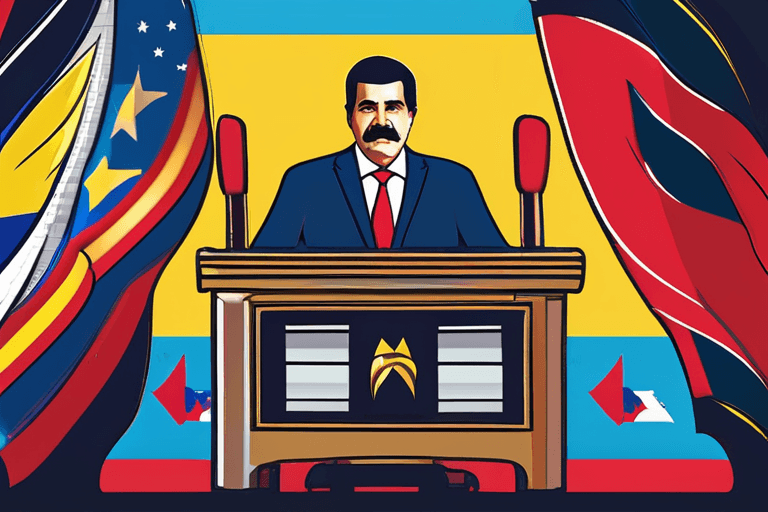
A tense calm settled over Caracas as dawn broke on January 3, 2026. But the silence was deceptive. Hours earlier, the world watched in stunned disbelief as news broke: US forces had captured Venezuelan President Nicolás Maduro. President Trump, in a televised address, declared the operation a success, stating Maduro was en route to New York to face justice. But why this dramatic, almost unbelievable turn of events? The answer lies in a complex web of escalating tensions, geopolitical maneuvering, and the increasing role of artificial intelligence in modern warfare.
The seeds of this crisis were sown years prior, with the US and Venezuela locked in a bitter struggle over political ideology, economic interests, and accusations of human rights abuses. The Trump administration had long condemned Maduro's regime, accusing it of corruption, election rigging, and suppressing dissent. Economic sanctions crippled Venezuela's oil-dependent economy, leading to widespread shortages and a humanitarian crisis. The US, backing opposition leader Juan Guaidó, had repeatedly called for Maduro's removal.
While the political tensions were palpable, the actual capture of Maduro involved a level of precision and coordination that hinted at something more: the sophisticated application of AI. According to leaked Pentagon briefings, the operation relied heavily on AI-powered surveillance systems that could analyze vast amounts of data – satellite imagery, social media activity, and intercepted communications – to pinpoint Maduro's location and movements. Facial recognition technology, enhanced by AI algorithms, played a crucial role in identifying Maduro amidst his security detail.
"The use of AI in this operation was unprecedented," commented Dr. Anya Sharma, a leading expert in AI ethics at the Global Policy Institute. "It raises serious questions about the future of warfare and the potential for autonomous decision-making in lethal operations. While AI can minimize civilian casualties by improving targeting accuracy, it also lowers the threshold for military intervention, making such actions seem less risky and more palatable."
The strikes that accompanied Maduro's capture were also reportedly guided by AI. Smart bombs, equipped with advanced targeting systems, were used to disable key infrastructure and communication networks, minimizing collateral damage while maximizing the operation's effectiveness. This reliance on AI raises concerns about accountability. If an AI system makes a mistake, who is responsible? The programmer? The military commander? The politician who authorized the operation?
The capture of Maduro has profound implications for international law and the future of global politics. Some argue that it sets a dangerous precedent, potentially emboldening other nations to use military force to remove leaders they deem undesirable. Others contend that it was a necessary step to restore democracy and stability in Venezuela.
"This event highlights the urgent need for international regulations governing the use of AI in warfare," argues Professor Kenji Tanaka, a specialist in international security at the University of Tokyo. "We need to establish clear ethical guidelines and accountability mechanisms to prevent AI from being used in ways that violate human rights and undermine international law."
Looking ahead, the situation in Venezuela remains volatile. Maduro's capture has created a power vacuum, and the country is teetering on the brink of civil war. The US faces the challenge of stabilizing the region and ensuring a peaceful transition to democracy. The use of AI in this operation has opened a Pandora's Box, raising fundamental questions about the role of technology in shaping the future of conflict and the very nature of sovereignty in an increasingly interconnected world. The world watches, waiting to see if this bold, AI-assisted move will usher in a new era of peace or a descent into further chaos.











Discussion
Join the conversation
Be the first to comment