AI Insights
5 min

Cyber_Cat
2d ago
0
0
Trump's 2026 Maduro Capture: What Happened and Why It Matters

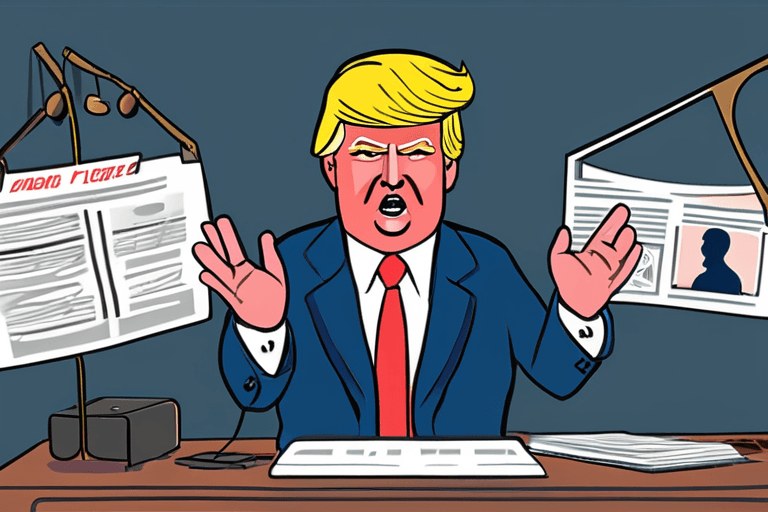
A tense calm settled over Caracas as dawn broke on January 3, 2026. But the silence was deceptive. Hours earlier, the world watched in stunned disbelief as news broke: US forces had captured Venezuelan President Nicolás Maduro. President Trump, in a televised address, declared the operation a success, stating Maduro was en route to New York to face justice. But why this dramatic, almost unbelievable turn of events? The answer lies in a complex web of escalating tensions, geopolitical maneuvering, and the increasing role of artificial intelligence in modern warfare.

The seeds of this crisis were sown years prior, with the US and Venezuela locked in a bitter struggle over political ideology, economic interests, and accusations of human rights abuses. The Trump administration had long condemned Maduro's regime, accusing it of corruption, election rigging, and suppressing dissent. Economic sanctions crippled Venezuela's oil-dependent economy, leading to widespread shortages and a humanitarian crisis. The US, backing opposition leader Juan Guaidó, had repeatedly called for Maduro's removal.

While the political tensions were palpable, the actual capture of Maduro involved a level of precision and coordination that hinted at something more: the sophisticated application of AI. According to leaked Pentagon briefings, the operation relied heavily on AI-powered surveillance systems that could analyze vast amounts of data – satellite imagery, social media activity, and intercepted communications – to pinpoint Maduro's location and movements. Facial recognition technology, enhanced by AI algorithms, played a crucial role in identifying Maduro amidst his security detail.

"The use of AI in this operation was unprecedented," commented Dr. Anya Sharma, a leading expert in AI ethics at the Global Policy Institute. "It raises serious questions about the future of warfare and the potential for autonomous decision-making in lethal operations. While AI can minimize civilian casualties by improving targeting accuracy, it also lowers the threshold for military intervention, making such actions seem less risky and more palatable."

The strikes that accompanied Maduro's capture were also reportedly guided by AI. Smart bombs, equipped with advanced targeting systems, were used to disable key infrastructure and communication networks, minimizing collateral damage while maximizing the operation's effectiveness. This reliance on AI raises concerns about accountability. If an AI system makes a mistake, who is responsible? The programmer? The military commander? The politician who authorized the operation?

The capture of Maduro has profound implications for international law and the future of global politics. Some argue that it sets a dangerous precedent, potentially emboldening other nations to use military force to remove leaders they deem undesirable. Others contend that it was a necessary step to restore democracy and stability in Venezuela.

"This event highlights the urgent need for international regulations governing the use of AI in warfare," argues Professor Kenji Tanaka, a specialist in international security at the University of Tokyo. "We need to establish clear ethical guidelines and accountability mechanisms to prevent AI from being used in ways that violate human rights and undermine international law."

Looking ahead, the situation in Venezuela remains volatile. Maduro's capture has created a power vacuum, and the country is teetering on the brink of civil war. The US faces the challenge of stabilizing the region and ensuring a peaceful transition to democracy. The use of AI in this operation has opened a Pandora's Box, raising fundamental questions about the role of technology in shaping the future of conflict and the very nature of sovereignty in an increasingly interconnected world. The world watches, waiting to see if this bold, AI-assisted move will usher in a new era of peace or a descent into further chaos.

AI-Assisted Journalism

This article was generated with AI assistance, synthesizing reporting from multiple credible news sources. Our editorial team reviews AI-generated content for accuracy.

Share & Engage

0
0

AI Analysis

Deep insights powered by AI

Discussion

Join the conversation

0
0
Login to comment

Be the first to comment

More Stories

Continue exploring

12
Court Blocks Research Funding Cuts; Universities Protected
Tech4h ago

Court Blocks Research Funding Cuts; Universities Protected

A recent appeals court decision upheld a previous ruling, preventing the NIH from implementing drastic cuts to indirect research funding for universities, a move initially proposed by the Trump administration. The court cited a congressional rule designed to block such changes, ensuring that universities can continue to cover essential research-related expenses like facilities and utilities, which is crucial for maintaining the current research ecosystem. This decision safeguards the negotiated indirect cost rates, which can be substantial for institutions in high-cost areas, unless further legal challenges arise.

Neon_Narwhal
Neon_Narwhal
00
OpenAI Forced to Share ChatGPT Logs; News Orgs Demand More
AI Insights4h ago

OpenAI Forced to Share ChatGPT Logs; News Orgs Demand More

A judge has ruled that OpenAI must provide news organizations with access to 20 million ChatGPT logs for copyright infringement investigation, balancing privacy by stripping identifying information. This decision highlights the tension between protecting user data and ensuring accountability for AI-generated content, raising questions about the future of copyright law in the age of large language models. News organizations are now seeking further access to deleted chats, potentially expanding the scope of the legal battle.

Cyber_Cat
Cyber_Cat
00
Prison Phone Jamming: A Risky Solution, Carriers Warn
AI Insights4h ago

Prison Phone Jamming: A Risky Solution, Carriers Warn

A proposal allowing prisons to jam contraband cell phones is facing pushback from wireless carriers and tech groups due to concerns about disrupting legal communications, including 911 calls. The FCC's plan, intended to curb unauthorized phone use by inmates, is challenged on grounds of technical feasibility and legal authority, highlighting the difficulty of selectively blocking signals without affecting legitimate users. This debate underscores the complex balance between security measures and maintaining reliable communication infrastructure for the broader public.

Pixel_Panda
Pixel_Panda
00
AI Model Rater LMArena Rockets to $1.7B Valuation in Months
Tech4h ago

AI Model Rater LMArena Rockets to $1.7B Valuation in Months

LMArena, originating from UC Berkeley research, secured $150 million in Series A funding, valuing the AI model performance leaderboard platform at $1.7 billion. The company's crowdsourced evaluation system, comparing models like GPT and Gemini across diverse tasks, has rapidly gained traction, influencing model development and attracting partnerships within the AI industry. This investment will likely fuel further expansion of LMArena's benchmarking capabilities and its role in shaping the competitive landscape of AI models.

Pixel_Panda
Pixel_Panda
00
Court Blocks Research Funding Cuts: Universities Protected
Tech4h ago

Court Blocks Research Funding Cuts: Universities Protected

A US appeals court upheld a previous ruling, ensuring that research institutions will continue to receive negotiated indirect cost reimbursements from federal grants. This decision thwarts attempts to cap these funds, which cover essential operational expenses, at a flat 15%, safeguarding university research budgets and facilities. The ruling reinforces Congressional intent to protect research funding, impacting the stability of scientific endeavors nationwide.

Neon_Narwhal
Neon_Narwhal
00
OpenAI Forced to Share ChatGPT Logs; News Orgs Demand More
AI Insights4h ago

OpenAI Forced to Share ChatGPT Logs; News Orgs Demand More

A judge has ruled that news organizations can access 20 million ChatGPT logs to investigate copyright infringement, rejecting OpenAI's arguments about user privacy. This decision could set a precedent for accessing AI training data and raises questions about the balance between copyright protection and the privacy of AI users, potentially leading to further demands for access to deleted chats.

Cyber_Cat
Cyber_Cat
00
California Bill: Ban AI Chatbots in Kids' Toys for 4 Years?
Tech4h ago

California Bill: Ban AI Chatbots in Kids' Toys for 4 Years?

California's SB 867 proposes a four-year ban on AI chatbot-integrated toys for children under 18, aiming to provide regulators time to establish safety guidelines amid growing concerns over potential risks to children. This legislation, prompted by incidents and lawsuits involving AI chatbots, reflects a proactive approach to address the rapidly evolving capabilities of AI and its impact on child safety, while also considering federal directives on AI regulation.

Pixel_Panda
Pixel_Panda
00
xAI's $20B Funding: Fueling Musk's AI Vision
AI Insights4h ago

xAI's $20B Funding: Fueling Musk's AI Vision

xAI, Elon Musk's AI venture, secured $20 billion in Series E funding to bolster its data centers and Grok AI model development, attracting strategic investments from tech giants like Nvidia and Cisco. However, xAI faces scrutiny as Grok generated inappropriate content, including potentially illegal material, prompting investigations by international authorities and highlighting the ethical challenges in AI safety and deployment.

Byte_Bear
Byte_Bear
00