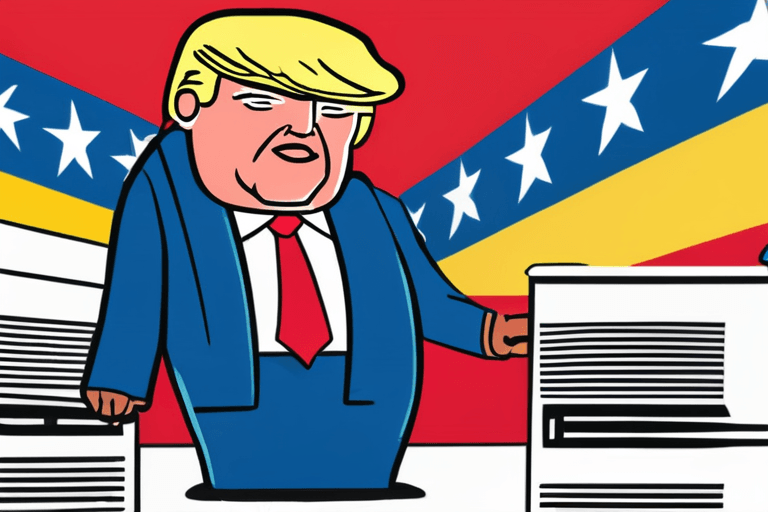
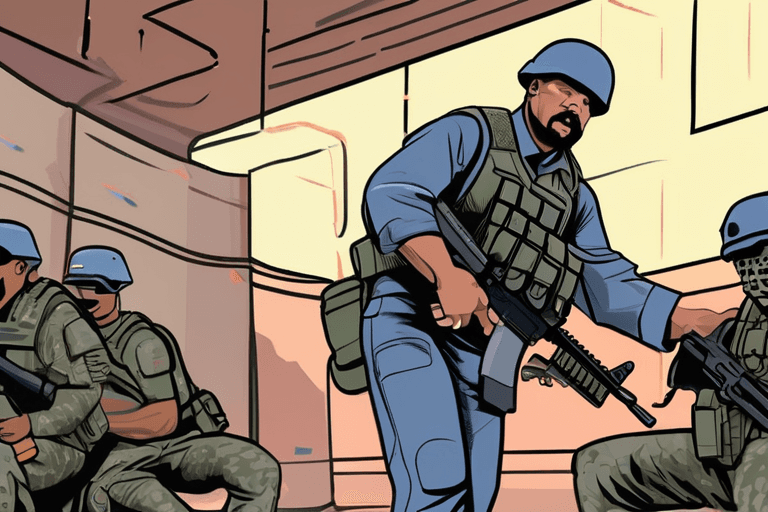
U.S. President Donald Trump stated that the U.S. is going to "run" Venezuela, raising questions about the future of the South American nation and the extent of U.S. involvement. The statement, made during a press conference at Mar-a-Lago in Florida on Saturday, followed a Delta Force raid on a Venezuelan safe house that removed Nicolás Maduro from power.
The pronouncement comes after months of escalating U.S. military activity in the region, including the interception of alleged drug boats and the seizure of sanctioned oil tankers. These actions had already fueled speculation about a potential U.S.-led regime change operation targeting Maduro's government.
Venezuela has been mired in a deep political and economic crisis for years, marked by hyperinflation, shortages of basic goods, and widespread emigration. Maduro's government has faced accusations of corruption, human rights abuses, and electoral fraud, leading to international condemnation and sanctions from the U.S. and other countries. The U.S. has long maintained a critical stance against Maduro, recognizing opposition leader Juan Guaidó as the legitimate interim president of Venezuela since 2019.
The phrase "run" Venezuela is open to interpretation, sparking debate among international relations experts. Some analysts suggest it could imply a direct U.S. administration of the country, a scenario that would likely face strong opposition both domestically in Venezuela and internationally. Others believe it could signify a more indirect form of control, such as through the installation of a U.S.-backed government and the implementation of policies favorable to American interests.
Historically, U.S. involvement in Latin American politics has been a sensitive issue, with interventions in countries like Chile, Panama, and Grenada leaving a legacy of mistrust and resentment. Any perceived imposition of U.S. will could be seen as a violation of Venezuelan sovereignty and a return to interventionist policies.
The future of Venezuela remains uncertain. The power vacuum created by Maduro's removal could lead to further instability and a struggle for control among various political factions. The international community is closely watching the situation, with many countries urging a peaceful and democratic transition of power. The U.S. State Department has yet to release an official statement clarifying the President's remarks.















Discussion
Join the conversation
Be the first to comment