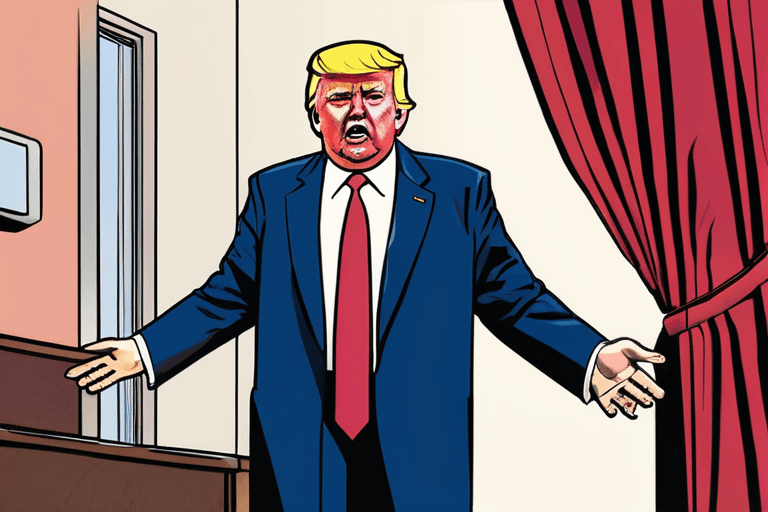
A tense calm settled over Caracas as dawn broke on January 3, 2026. But the silence was deceptive. Hours earlier, the world watched in stunned disbelief as news broke: US forces had captured Venezuelan President Nicolás Maduro. President Trump, in a televised address, declared the operation a success, stating Maduro was en route to New York to face justice. But why this dramatic escalation? The seeds of this audacious move were sown in a complex web of geopolitical tensions, fueled by economic instability, political polarization, and the ever-increasing influence of artificial intelligence in international affairs.
The relationship between the US and Venezuela had been deteriorating for years. Washington accused Maduro's regime of corruption, human rights abuses, and undermining democracy. Economic sanctions crippled Venezuela's oil-dependent economy, leading to widespread shortages and a humanitarian crisis. The US, along with many other countries, recognized opposition leader Juan Guaidó as the legitimate interim president, further inflaming tensions.
But the capture of Maduro wasn't simply a culmination of these long-standing grievances. It was also a reflection of how AI is reshaping the landscape of international conflict. In the months leading up to the operation, sophisticated AI-powered intelligence gathering played a crucial role. Algorithms sifted through massive amounts of data – social media posts, satellite imagery, intercepted communications – to predict Maduro's movements and vulnerabilities. This predictive analysis, once the realm of human analysts, allowed the US military to plan the operation with unprecedented precision.
"AI provided us with a level of situational awareness we've never had before," explained a Pentagon source familiar with the operation, speaking on condition of anonymity. "We were able to anticipate Maduro's security protocols and identify the optimal window for the capture."
The use of AI in this context raises profound ethical questions. While proponents argue that AI can minimize civilian casualties by enabling more targeted operations, critics warn of the dangers of algorithmic bias and the potential for autonomous weapons systems to escalate conflicts.
"We need to have a serious conversation about the role of AI in warfare," said Dr. Anya Sharma, a professor of international relations at MIT. "The speed and scale at which AI can process information can lead to rash decisions with potentially catastrophic consequences. We must ensure human oversight and accountability in all AI-driven military operations."
The capture of Maduro also highlights the growing trend of "digital sovereignty" – the idea that nations should have control over their own data and digital infrastructure. Venezuela, like many other countries, has struggled to compete with the technological prowess of the US and other global powers. This digital asymmetry can be exploited to undermine national security and sovereignty.
Looking ahead, the implications of the Maduro capture are far-reaching. It sets a precedent for the use of military force to remove foreign leaders, raising concerns about the erosion of international norms and the potential for future interventions. It also underscores the urgent need for international cooperation to regulate the development and deployment of AI in military applications. The world is entering a new era of conflict, one where algorithms and data are as important as tanks and missiles. The challenge lies in ensuring that these powerful tools are used responsibly and ethically, to promote peace and stability rather than further exacerbate global tensions.

















Discussion
Join the conversation
Be the first to comment