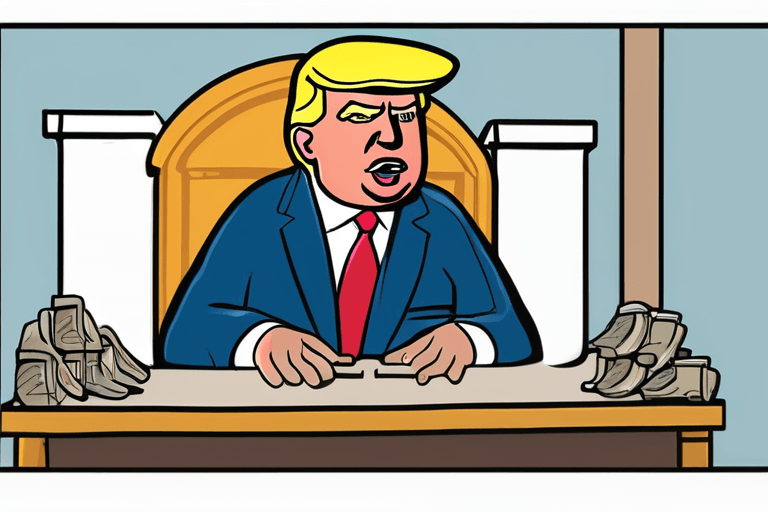
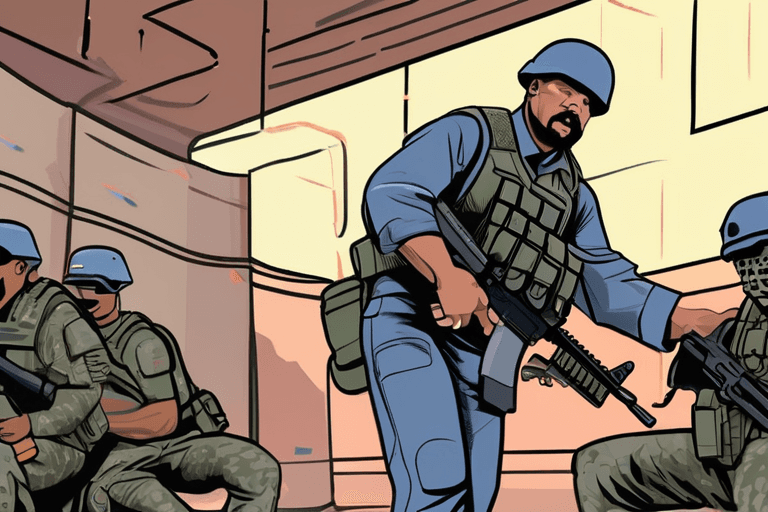
U.S. President Donald Trump stated on Saturday that the U.S. is going to "run" Venezuela, raising questions about the future of the South American nation and the extent of U.S. involvement there. The statement, made during a press conference at Mar-a-Lago in Palm Beach, Florida, followed a Delta Force raid on a Venezuelan safe house that resulted in the removal of Nicolás Maduro from power.
The circumstances surrounding Maduro's removal remain unclear, but Trump's declaration suggests a significant shift in U.S. policy toward Venezuela, which has been under increasing pressure from Washington in recent months. The U.S. has been building up military forces around Venezuela, targeting alleged drug boats and seizing sanctioned oil tankers, actions that have been interpreted as a prelude to a potential regime change operation.
Venezuela has been in a state of political and economic crisis for years, marked by hyperinflation, shortages of basic goods, and widespread emigration. Maduro's government has been accused of authoritarianism, human rights abuses, and corruption, leading to international condemnation and sanctions from the U.S. and other countries. The U.S. has long recognized opposition leader Juan Guaidó as the legitimate interim president of Venezuela, though Guaidó's support within the country has waned.
The concept of one nation "running" another raises complex questions under international law and norms of sovereignty. Direct administration by a foreign power is typically associated with colonial contexts or post-conflict situations under international mandate, neither of which formally apply to Venezuela. Trump's statement could imply a range of possibilities, from direct U.S. control over key sectors of the Venezuelan government to a more indirect form of influence through financial aid and political advising.
Historically, U.S. involvement in Latin America has been a sensitive issue, marked by interventions and support for authoritarian regimes during the Cold War. These actions have fueled anti-American sentiment and contributed to political instability in the region. Any perceived imposition of U.S. control over Venezuela is likely to be met with resistance from within the country and condemnation from other nations in Latin America and beyond.
The implications of Trump's statement for regional stability and international relations remain to be seen. The U.S. State Department has not yet issued a formal clarification of the president's remarks. It is expected that the United Nations and the Organization of American States will address the situation in the coming days.
















Discussion
Join the conversation
Be the first to comment