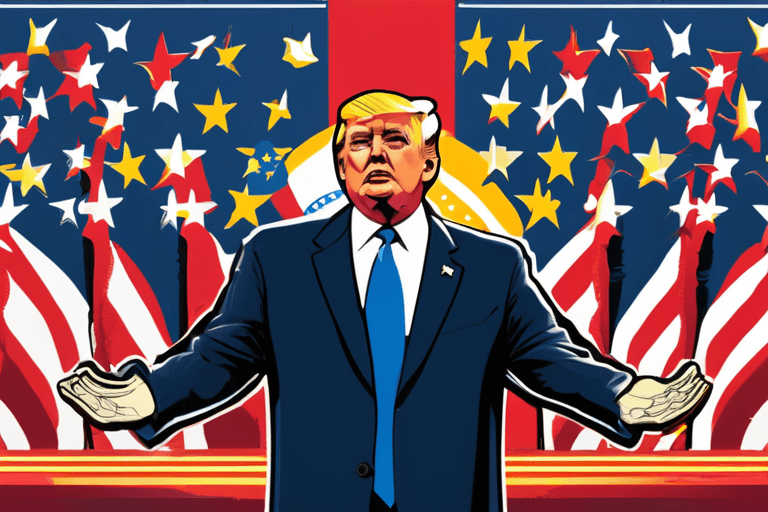
President Trump's decision to depose Venezuelan President Nicolás Maduro through military action has garnered support from Republican leaders but also faces skepticism and opposition from some U.S. elected officials. The invasion, which resulted in the capture of Maduro and his wife on Saturday, Jan. 3, 2026, has sparked debate across the political spectrum regarding its legality and potential consequences.
While many conservative lawmakers voiced their support for Trump's actions, a small group of Republican House members and GOP Senators expressed concerns, describing the move as unlawful or misguided. These dissenting voices within the Republican party have questioned the legal authority under which the President acted.
The debate highlights the complex relationship between the executive branch and Congress regarding military interventions. According to constitutional law experts, the President typically needs congressional approval for military actions unless there is an imminent threat to national security. In this instance, some lawmakers argue that Trump should have sought congressional authorization before initiating military action against Venezuela.
The situation raises questions about the future of U.S.-Venezuelan relations and the potential for further instability in the region. The capture of Maduro has created a power vacuum in Venezuela, and it remains unclear who will assume leadership and how the country will transition to a new government.
The U.S. government has stated its intention to work with international partners to support a peaceful and democratic transition in Venezuela. However, critics argue that the U.S. intervention could backfire and lead to further conflict and instability.
The situation remains fluid, and the long-term consequences of the U.S. military action are yet to be seen. The coming weeks will be crucial in determining the future of Venezuela and the role of the United States in the region.

















Discussion
Join the conversation
Be the first to comment