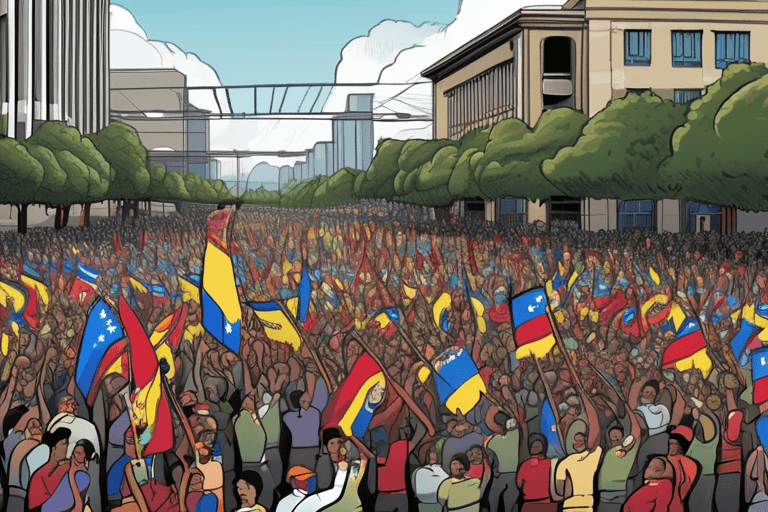
Caracas, Venezuela – Following the capture of President Nicolás Maduro in a U.S. military operation early Saturday, a sense of unease permeated Venezuela's capital, with many residents hesitant to resume normal activities. Dozens of businesses remained closed Sunday, and those venturing out appeared apprehensive, according to eyewitness accounts.
David Leal, a 77-year-old parking attendant, observed the deserted streets near the presidential palace, which was being guarded by armed civilians and military personnel. "People are still shaken," Leal said, adding, "May God give us strength."
The U.S. military operation marked a significant escalation in the ongoing political turmoil in Venezuela. The intervention followed years of economic crisis, political instability, and accusations of authoritarian rule against Maduro's government. The circumstances surrounding Maduro's capture remain unclear.
Initial statements from U.S. President Donald Trump indicated the U.S. would administer the country until stability was achieved. However, Secretary of State Marco Rubio appeared to walk back those remarks on Sunday, asserting that Washington would leverage control of Venezuela's oil industry to compel policy changes.
Venezuela has experienced considerable political unrest in recent years, including widespread protests, attempted coups, and international pressure for democratic reforms. The nation's economy has been in freefall, marked by hyperinflation, shortages of essential goods, and mass emigration.
The U.S. has long been critical of Maduro's government, imposing sanctions and recognizing opposition leader Juan Guaidó as the interim president. The U.S. has accused Maduro of human rights abuses, corruption, and undermining democratic institutions. Maduro, in turn, has accused the U.S. of meddling in Venezuela's internal affairs and attempting to overthrow his government.
The future of Venezuela remains uncertain. Rubio insisted in interviews that Washington will use control of Venezuela’s oil industry to force policy change. The immediate priorities are likely to include establishing a transitional government, addressing the humanitarian crisis, and organizing free and fair elections.
















Discussion
Join the conversation
Be the first to comment