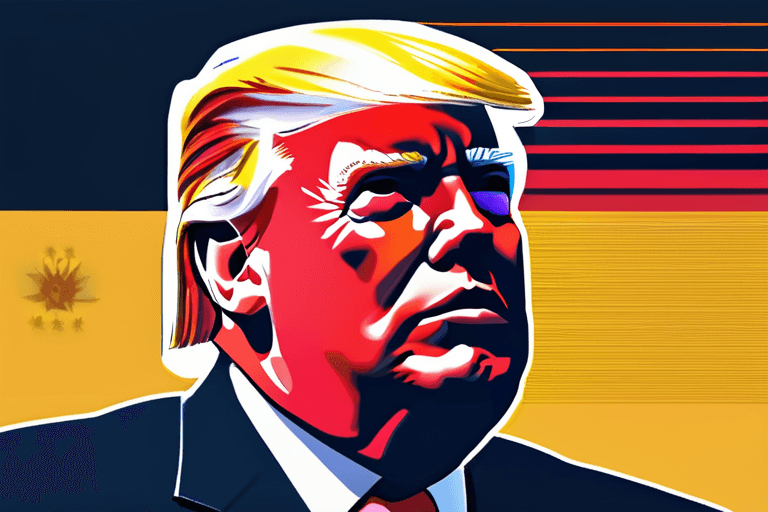
A tense calm settled over Caracas as dawn broke on January 3, 2026. But the silence was deceptive. Hours earlier, the world watched in stunned disbelief as news broke: US forces had captured Venezuelan President Nicolás Maduro in a daring military operation. President Trump, in a televised address, confirmed Maduro was en route to New York, held on a US military vessel. The move, he declared, was a necessary step after months of escalating tensions. But what chain of events led to this unprecedented act, and what does it signify for the future of international relations in an age increasingly shaped by artificial intelligence?
The roots of the US intervention lie in a complex web of political and economic factors. For years, the US had condemned Maduro's increasingly authoritarian rule, citing human rights abuses, economic mismanagement, and the suppression of democratic institutions. Washington had already imposed sanctions on Venezuelan officials and entities, hoping to pressure Maduro to step down. However, these measures proved ineffective. As Joshua Keating, a senior correspondent at Vox specializing in foreign policy, noted in the hours following the capture, "The situation in Venezuela had reached a boiling point. The US felt it had exhausted all other options."
The narrative took a dramatic turn in the months leading up to the intervention. US intelligence, increasingly reliant on AI-powered analysis of social media trends and satellite imagery, detected what it believed were preparations for a large-scale crackdown on opposition forces. Sophisticated algorithms, trained on vast datasets of Venezuelan political discourse, predicted a significant escalation of violence. This AI-driven assessment, presented to President Trump, reportedly played a crucial role in his decision to authorize the military operation.
The operation itself was a testament to the growing role of AI in modern warfare. Drones, guided by advanced AI algorithms, conducted reconnaissance missions, identifying key targets and mapping out potential escape routes. AI-powered systems analyzed Venezuelan military communications, providing real-time intelligence to US forces on the ground. While the US military has been developing and deploying AI for years, the capture of Maduro marked a significant escalation in its application in a real-world conflict.
"We are entering a new era of international relations," commented Dr. Anya Sharma, a leading expert in AI ethics at the University of Oxford. "The use of AI in this operation raises profound questions about accountability, transparency, and the potential for unintended consequences. If AI is making critical decisions in military operations, who is responsible when things go wrong?"
The implications of the Maduro capture extend far beyond Venezuela. It sets a precedent for the use of military force to remove foreign leaders, raising concerns about the erosion of national sovereignty and the potential for future interventions. Furthermore, it highlights the increasing influence of AI in shaping foreign policy decisions, a trend that demands careful scrutiny and robust ethical guidelines. As AI becomes more sophisticated, its role in international relations will only grow, requiring policymakers and citizens alike to grapple with its complex implications. The world watches, waiting to see what the long-term consequences of this unprecedented action will be, and how AI will continue to reshape the landscape of global power.

















Discussion
Join the conversation
Be the first to comment