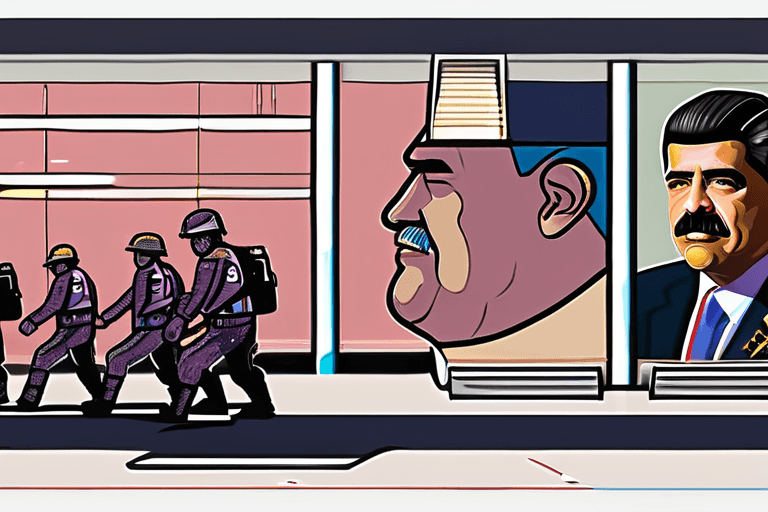
A tense calm settled over Caracas as dawn broke on January 3, 2026. Just hours before, the city had been rocked by targeted strikes, the culmination of a rapidly escalating conflict between the United States and Venezuela. Then came the announcement: US forces had captured President Nicolás Maduro. The world watched, stunned, as the news reverberated across digital networks, fueled by AI-driven analysis and instant commentary. But how did we get here? What chain of events led to this unprecedented intervention?
The roots of the crisis lie in a complex web of political, economic, and technological factors. For years, the US had condemned Maduro's regime, citing human rights abuses, corruption, and the country's economic collapse. Sanctions had crippled Venezuela's oil industry, further exacerbating the humanitarian crisis. The rise of sophisticated AI-powered disinformation campaigns on both sides only fueled the flames. Deepfake videos, indistinguishable from reality, circulated widely, each side accusing the other of manipulating public opinion and inciting violence.
The situation reached a boiling point in late 2025. US intelligence, increasingly reliant on AI-driven predictive analytics, identified what they believed to be an imminent threat: the deployment of advanced, AI-controlled weaponry by the Venezuelan military. This intelligence, while never fully verified, triggered a series of escalating actions. The US increased its military presence in the region, conducting provocative naval exercises. Venezuela responded with its own shows of force, further raising tensions.
"The AI was telling us that the probability of a large-scale conflict was increasing exponentially," explained Dr. Anya Sharma, a leading expert in AI and international security at the Global Policy Institute, in a post-capture interview. "The algorithms were picking up on subtle shifts in communication patterns, troop movements, and even economic indicators that humans might have missed. But the question is, how much do we trust these predictions when the stakes are so high?"
The decision to launch a military operation, culminating in Maduro's capture, was undoubtedly controversial. Critics argued that it was a violation of international law and a dangerous precedent for interventionism. Supporters maintained that it was a necessary step to prevent a wider conflict and protect US interests. The debate highlighted a growing dilemma in the age of AI: how to balance the potential benefits of advanced technology with the risks of relying too heavily on its predictions, especially in matters of war and peace.
The capture of Maduro raises profound questions about the future of international relations. As AI becomes increasingly integrated into military and diplomatic decision-making, the potential for miscalculation and unintended consequences grows. The Venezuelan crisis serves as a stark reminder of the need for careful oversight, ethical guidelines, and a healthy dose of skepticism when dealing with AI-driven intelligence. The world now waits to see what the future holds for Venezuela, and for the increasingly complex relationship between technology, power, and international stability. The events of January 3, 2026, may well be remembered as a turning point, a moment when the promise and peril of AI in global affairs became undeniably clear.










Discussion
Join the conversation
Be the first to comment