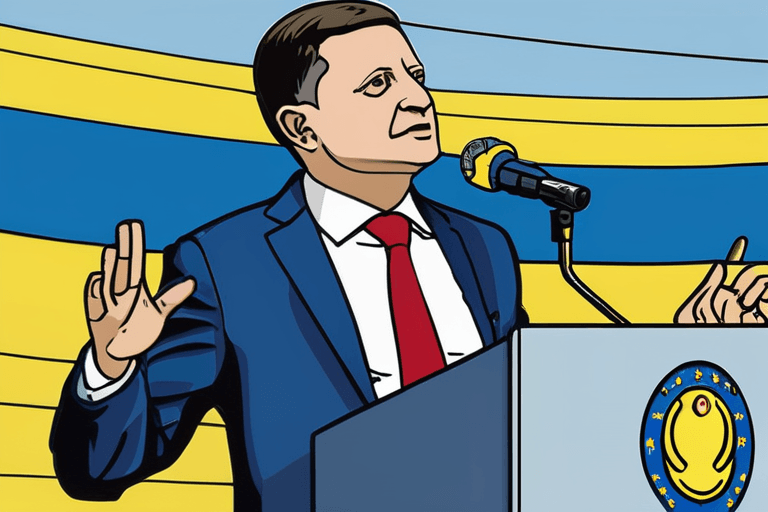
In a move signaling Ukraine's intent to aggressively pursue postwar economic revitalization, President Volodymyr Zelensky has tapped former Canadian Deputy Prime Minister Chrystia Freeland as an adviser on economic development. The appointment, announced Monday, brings a seasoned political figure with deep ties to the West into the Ukrainian fold, tasked with navigating the complex landscape of foreign investment and economic reform.
Freeland's selection marks the first instance during the ongoing conflict of a Western politician of such stature assuming a formal role within the Ukrainian government. Zelensky, in his public statement, emphasized Freeland's proven ability to attract foreign capital and her understanding of intricate economic policies. He indicated her advisory role would be crucial in shaping Ukraine's postwar reconstruction efforts, contingent upon the success of ongoing peace negotiations. While Zelensky lauded Freeland's expertise, specific details regarding the precise scope of her responsibilities remain limited.
The appointment arrives at a pivotal moment, coinciding with proposals from the Trump administration for a significant U.S. role in Ukraine's rebuilding. Zelensky alluded last month to a draft settlement agreement that envisions the establishment of U.S.-controlled investment funds, potentially valued in the hundreds of billions of dollars. These funds, according to the proposal, would be fueled by frozen Russian central bank assets, primarily held in Belgium, and supplemented by European Union reconstruction funds, among other sources. The allocation of these funds would be subject to U.S. oversight.
The potential influx of capital, while promising, raises questions about the balance of power in Ukraine's future economy. Some analysts express concern about the potential for undue influence from external actors. "While foreign investment is undoubtedly necessary for Ukraine's recovery, it's crucial to ensure that the terms are favorable and that Ukraine retains control over its own economic destiny," commented Dr. Anya Kovalenko, an economist specializing in post-Soviet economies. "The involvement of U.S.-controlled funds, while potentially beneficial in the short term, could lead to long-term dependencies if not carefully managed."
Freeland's appointment could be interpreted as a strategic move to balance competing interests and ensure a more diversified approach to economic reconstruction. Her experience in navigating international finance and her understanding of Western political dynamics could prove invaluable in securing favorable terms for Ukraine. However, the success of her advisory role will depend on her ability to bridge the gap between competing visions for Ukraine's economic future and to foster a collaborative environment among international stakeholders.
The road ahead for Ukraine is fraught with challenges, but the appointment of Chrystia Freeland signals a commitment to proactive economic planning and a willingness to engage with the West on a deeper level. Whether this partnership will translate into a sustainable and equitable recovery remains to be seen, but it undoubtedly marks a significant step in Ukraine's journey toward rebuilding.
















Discussion
Join the conversation
Be the first to comment