Nvidia announced its Alpamayo technology platform on Monday, designed to equip self-driving cars with advanced reasoning capabilities. CEO Jensen Huang unveiled the technology at the annual CES technology conference in Las Vegas, stating that Alpamayo will enable autonomous vehicles to navigate complex situations, make informed decisions, and explain their actions.
According to Huang, Alpamayo allows self-driving cars to "think through rare scenarios, drive safely in complex environments, and explain their driving decisions." This technology aims to bridge the gap between current autonomous systems and human-like driving intelligence by incorporating a more sophisticated AI.
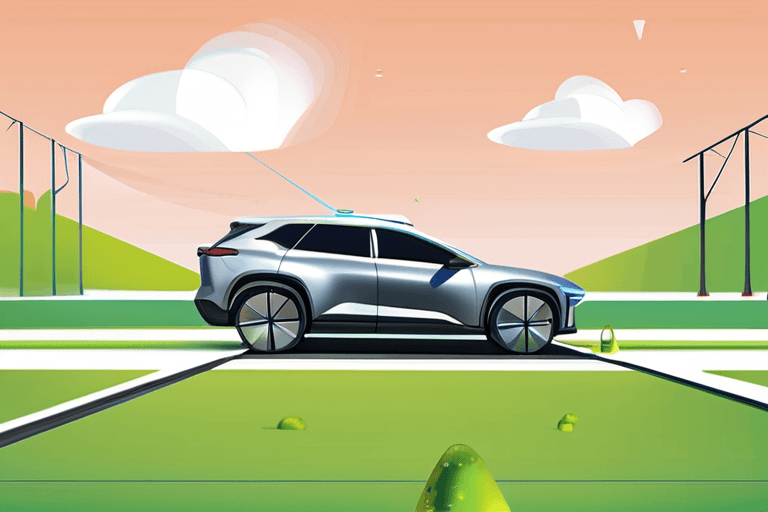
Nvidia also announced that it has begun producing a driverless car, the Mercedes-Benz CLA, powered by its technology in partnership with Mercedes-Benz. The vehicle is slated for release in the U.S. in the coming months, followed by launches in Europe and Asia. Huang noted that the project has provided Nvidia with valuable insights into building robotic systems for its partners.
Analysts suggest that this announcement solidifies Nvidia's position as a leader in integrating AI hardware and software, furthering its expansion into physical AI applications. Paolo Pescatore, an analyst, stated that "NVIDIA's pivot toward AI at scale and AI systems as differentiators will help keep it way ahead of rivals."
The Alpamayo platform represents Nvidia's effort to move beyond basic automation in self-driving cars and incorporate more advanced AI that can handle unpredictable scenarios. This development is part of a broader industry trend toward enhancing the safety and reliability of autonomous vehicles through sophisticated AI systems. The release of the Mercedes-Benz CLA powered by Nvidia's technology will serve as a key test case for the real-world application of Alpamayo.














Discussion
Join the conversation
Be the first to comment