The idea of American taxpayers footing the bill to revive Venezuela's crippled oil industry might seem like a far-fetched scenario, yet it's one that former President Donald Trump floated in a recent interview, sparking debate and raising eyebrows across the energy sector.
Venezuela, once a major oil producer, has seen its output plummet in recent years due to political instability, corruption, and economic mismanagement. The nation holds vast reserves, but extracting and exporting that oil requires significant investment in infrastructure, technology, and expertise – resources currently lacking in Venezuela.
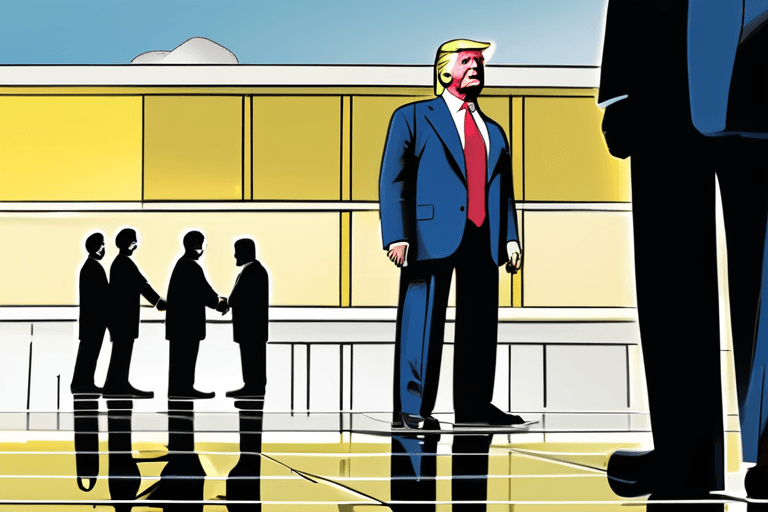
Trump, in an interview with NBC News, suggested a plan where US oil companies would undertake the task of rebuilding Venezuela's oil infrastructure, with the US government reimbursing them for their expenses. "A tremendous amount of money will have to be spent and the oil companies will spend it, and then they'll get reimbursed by us or through revenue," he stated.
The proposal comes at a time when the Biden administration has been exploring ways to ease global energy supply constraints exacerbated by the war in Ukraine. Lifting sanctions on Venezuela and allowing US companies to operate there more freely has been discussed as a potential option, albeit a controversial one given the country's human rights record and political situation.
However, the oil industry itself appears hesitant. The Wall Street Journal reported that major oil companies are wary of investing in Venezuela due to the uncertainty surrounding its political future. "The oil industry is saying that they don't know what Venezuela's government is going to look like tomorrow," Collin Eaton of the Wall Street Journal said in a podcast interview, emphasizing the need for "a long, stable environment to invest in."
Adding to the complexity, US Energy Secretary Chris Wright is reportedly scheduled to meet with representatives from Chevron, ConocoPhillips, and ExxonMobil at an energy conference in Miami this week. The discussions are expected to cover a range of topics, including the potential for US involvement in Venezuela's oil sector.
The prospect of US taxpayer money being used to fund oil production in a foreign country raises a number of questions. Critics argue that it could set a dangerous precedent, potentially incentivizing other countries to mismanage their resources in the expectation of a US bailout. Others question the ethics of supporting a regime with a questionable human rights record, even if it could lead to lower energy prices for American consumers.
Supporters, on the other hand, argue that boosting Venezuelan oil production could help stabilize global energy markets, reduce reliance on other less friendly oil-producing nations, and ultimately benefit the US economy. They also point out that US companies have the expertise and technology to extract Venezuelan oil in a more environmentally responsible manner than the current operators.
The debate over Venezuela's oil future highlights the complex interplay of geopolitics, economics, and energy security. Whether Trump's suggestion gains traction remains to be seen, but it has undoubtedly injected a new element into the ongoing discussion about how to address the global energy crisis and the role the US should play in shaping the future of oil production.

















Discussion
Join the conversation
Be the first to comment