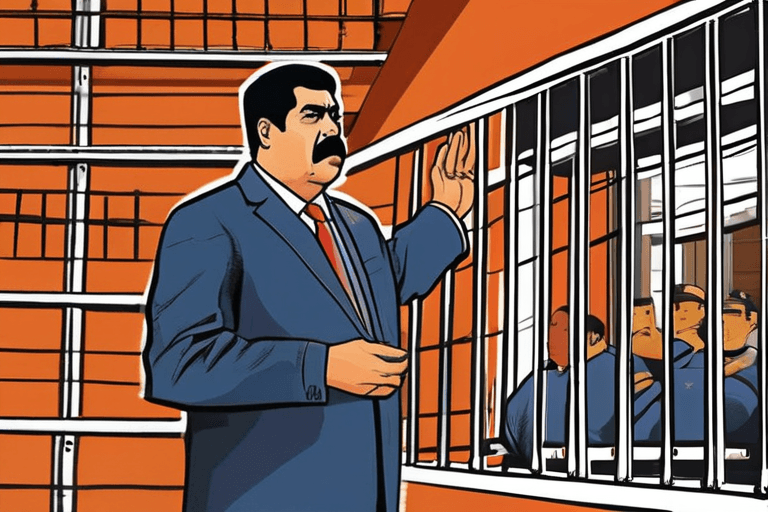
Behind the imposing walls of Brooklyn's Metropolitan Detention Center (MDC), a new chapter is unfolding in a story already thick with intrigue. Nicolás Maduro, the controversial president of Venezuela, now finds himself a resident of this federal jail, joining a list of notorious figures who have temporarily called it home. His arrival, following a dramatic capture by the U.S. military, throws a spotlight on an institution known as much for its high-profile inmates as for its troubling history.
MDC is more than just a holding facility; it's a microcosm of the complex relationship between law, power, and justice. Built to house pre-trial detainees and those serving short sentences, it has become a revolving door for individuals accused of some of the most serious federal crimes. Luigi Mangione, a name whispered in legal circles, currently resides within its walls. Before him, Joaquin "El Chapo" Guzman, the infamous Mexican drug kingpin, occupied a cell, his presence a stark reminder of the jail's role in housing individuals who have shaped global headlines.
But MDC's notoriety extends beyond its famous residents. The facility has been plagued by reports of dangerous conditions, including overcrowding, inadequate medical care, and allegations of abuse. In 2019, a week-long power outage plunged the jail into darkness and cold, leaving inmates without heat, light, or access to basic services. The incident sparked outrage and raised serious questions about the management and oversight of federal detention centers.
The presence of Maduro, facing federal criminal charges related to alleged drug trafficking and weapons, adds another layer of complexity to an already fraught situation. His case is not just a legal matter; it's a geopolitical event with potential ramifications for U.S.-Venezuelan relations and the stability of the region. The fact that he is being held in a facility with a history of problems raises concerns about his safety and well-being, as well as the potential for further controversy.
"The MDC is a pressure cooker," says Maria Garcia, a human rights lawyer who has represented inmates at the facility. "It's a place where tensions run high, and the conditions can be incredibly difficult. Putting someone like Maduro in that environment is a risky move."
The situation also raises questions about the role of artificial intelligence in the justice system. AI is increasingly being used to predict recidivism, assess risk, and even make sentencing recommendations. However, these algorithms are not without their flaws. They can be biased, perpetuating existing inequalities and leading to unfair outcomes. In the case of Maduro, it's unlikely AI played a direct role in his detention, but it highlights the growing influence of these technologies in shaping the lives of individuals caught in the web of the legal system.
Looking ahead, the case of Nicolás Maduro at MDC serves as a stark reminder of the challenges facing the criminal justice system. It underscores the need for greater transparency and accountability in the management of detention facilities, as well as a more critical examination of the role of AI in shaping legal outcomes. As Maduro awaits trial within the walls of MDC, his story becomes intertwined with the larger narrative of an institution struggling to balance security, justice, and human rights.
















Discussion
Join the conversation
Be the first to comment