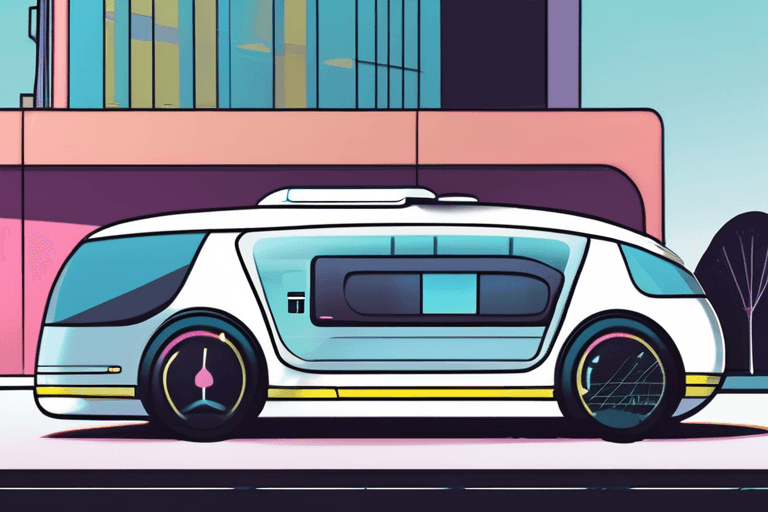
Uber, Lucid Motors, and Nuro unveiled their collaborative robotaxi at the 2026 Consumer Electronics Show, following a development period of over six months. TechCrunch was granted an exclusive preview before the official reveal. The robotaxi is the result of a deal where Uber invested $300 million in Lucid and committed to purchasing 20,000 of Lucid's electric vehicles.
The companies announced Monday that the robotaxi is undergoing testing on public roads in anticipation of a commercial launch in the San Francisco Bay Area later this year. The vehicle is based on the Lucid Gravity SUV and incorporates high-resolution cameras, solid-state lidar sensors, and radar technology integrated into the vehicle's body and a roof-mounted halo. The autonomous driving system is powered by Nvidia's Drive AGX Thor computer.
The roof-mounted halo includes integrated LED lights designed to help riders easily identify their assigned vehicle, a feature similar to that used by Waymo's Jaguar I-Pace SUVs. A key aspect of the production process is that the autonomous technology is integrated into the Gravity during its assembly at Lucid Motors' factory in Casa Grande, Arizona. This approach is intended to save time and reduce costs compared to retrofitting existing vehicles, as Waymo currently does with its Jaguar I-Pace fleet.
The collaboration between Uber, Lucid, and Nuro aims to address the growing demand for autonomous transportation solutions. By combining Lucid's electric vehicle platform with Nuro's expertise in autonomous delivery and Uber's ride-hailing network, the companies hope to create a commercially viable and scalable robotaxi service. The integration of the autonomous technology during the manufacturing process is expected to streamline production and improve overall efficiency.
The launch of the robotaxi service in the San Francisco Bay Area will mark a significant step in the development and deployment of autonomous vehicles. The companies plan to closely monitor the performance of the vehicles and gather data to further refine the autonomous driving system. The data collected during the initial deployment phase will be used to optimize the service and expand it to other markets in the future.














Discussion
Join the conversation
Be the first to comment