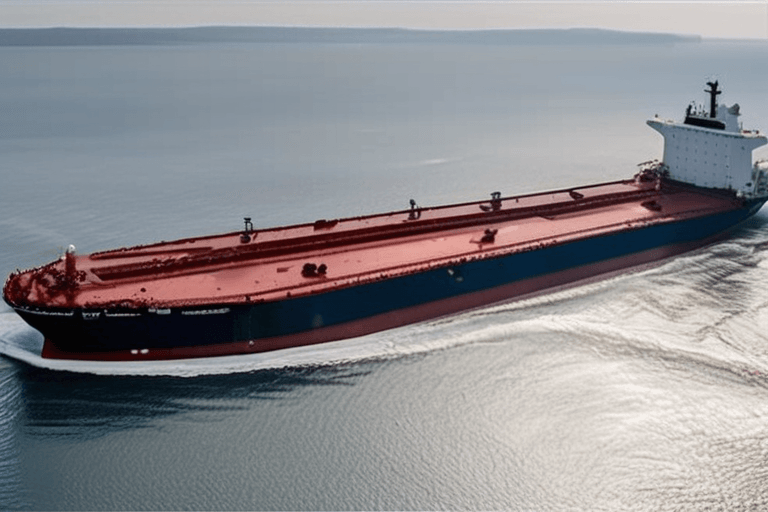
A video released by Russian state media on Jan. 7, 2026, purportedly shows a U.S. Coast Guard vessel shadowing a Russian-flagged oil tanker in the North Atlantic. U.S. authorities subsequently seized the tanker, alleging it was transporting oil from Iran and Venezuela in violation of U.S. sanctions.
The U.S. government claims the tanker was engaged in activities that circumvented international sanctions designed to limit revenue streams for both Iran and Venezuela. These sanctions, according to the U.S. Treasury Department, are intended to pressure both nations to alter their respective policies.
The Russian government has denounced the seizure as an act of piracy and a violation of international maritime law. "This is a blatant disregard for established norms and a dangerous escalation," a statement released by the Russian Foreign Ministry said. The statement further asserted that the tanker was operating legally and carrying legitimate cargo.
The incident raises complex questions about the use of artificial intelligence in maritime surveillance and enforcement. AI-powered systems are increasingly being deployed to monitor shipping lanes, detect suspicious activity, and predict potential sanctions violations. These systems often utilize machine learning algorithms to analyze vast datasets, including vessel tracking information, cargo manifests, and financial transactions.
Dr. Anya Sharma, a professor of maritime law at the University of California, Berkeley, explained that AI's role in enforcing sanctions is evolving rapidly. "AI can sift through massive amounts of data far more efficiently than humans, identifying patterns and connections that might otherwise go unnoticed," Sharma said. "However, the use of AI also raises concerns about transparency, accountability, and potential bias."
One key concern is the "black box" nature of some AI algorithms, where the decision-making process is opaque and difficult to understand. This lack of transparency can make it challenging to challenge the accuracy of AI-driven assessments, potentially leading to wrongful seizures or other unjust outcomes. Furthermore, biases in the data used to train AI systems can perpetuate existing inequalities and lead to discriminatory enforcement practices.
The incident also highlights the growing tension between the U.S. and Russia over energy resources and geopolitical influence. The U.S. has long sought to limit Iran and Venezuela's oil exports, viewing them as sources of funding for activities that undermine U.S. interests. Russia, on the other hand, has cultivated closer ties with both countries, providing them with economic and political support.
The current status of the tanker and its crew is unclear. The U.S. government has not yet released details about the seizure or the charges against the vessel's owners and operators. Legal experts anticipate a protracted legal battle, potentially involving international courts and tribunals. The incident is likely to further strain relations between the U.S. and Russia and could have broader implications for global energy markets and international trade.



















Discussion
Join the conversation
Be the first to comment